
Nursing
Nursing
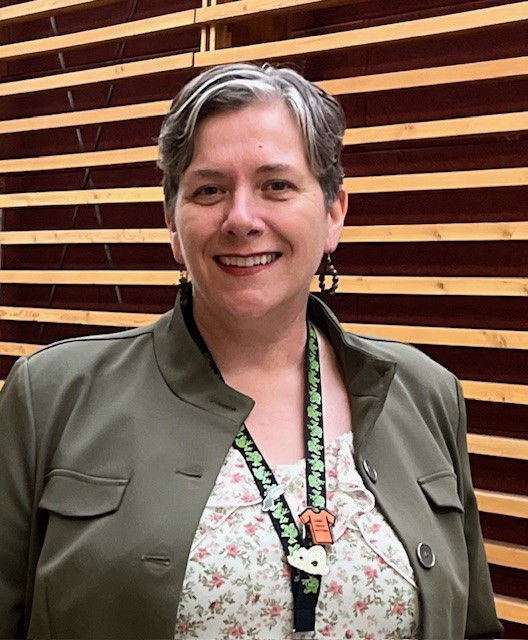
Assistant Professor, Nursing (BSN) Program
Faculty of Health Sciences
Chilliwack campus at CEP, A2407
email HeatherHeather Campbell is an Assistant Professor and teaches in Semester 3 (Surgical).
Heather is a white settler of Scottish and Austrian descent and had the privilege of growing up on the unceded traditional territories of the Musqueam, Squamish, and Tsleil-Waututh Nations, and now resides on the traditional and unceded territory of the Sto:lo Peoples. She graduated from the University of the Fraser Valley’s (UFV) Nursing Program in 2016 with a Bachelor of Science in Nursing and has spent the majority of her career in operating rooms, palliative care, and as a sessional instructor within various semesters of the UFV nursing program. Heather has dedicated herself as a leader and advocate, both in hospital and academic settings, so culturally safer health care is provided and systemic barriers are dismantled. She has a Masters of Health Leadership and Policy in Clinical Education from the University of British Columbia and she strives to do meaningful work with The University of the Fraser Valley!
Heather is a mom to a wonderful daughter and son, and the three of them spent many summers in Northern BC learning from the youth of Lake Babine Nation. This time of learning and sharing had lifelong impacts on her and her children, and they are all still in contact with many of their friends from Tachet. Her and her wife enjoy spending time growing food, sharing meals and stories with friends, and spending time outdoors as much as possible.
Heather is humbled and excited to be part of the learning journey of her students here at UFV.
Bachelor of Science in Nursing (UFV),
Perioperative Nursing Specialty (BCIT),
Master of Health Leadership and Policy in Clinical Education (UBC)
British Columbia College of Nurses and Midwives (BCCNM),
Canadian College of Health Leaders (CCHL)
My goal as a clinical educator is for my students to engage with the learning material in order to feel confident in their journey of becoming advocates and patient-centered nurses. This requires students to feel safe, secure, and respected in their learning environment. I create this type of space using a humanistic and pragmatic approach, with the aim of fostering student growth and success. Through consistency, authentic leadership, and transparency, trust is created and students feel comfortable to express themselves and engage in meaningful educational experiences without fear of judgement. Apprenticeship and nurturing remain dominant in my teaching style (Collins & Pratt, 2011) and I believe this has aided in the creation of trauma-informed learning environments for my students.
Reciprocity
I value and emphasize the importance of relational and reciprocal interactions between educator and learner, and I believe building strong connections with students encourages collaboration, which deepens their overall level of thinking. The ability to make my students feel valuable and included by honouring their uniqueness, and adapt to various learner styles, has empowered them to take an active role in their learning journey. This strategy has created spaces where student engagement flourishes and has led to rich discussion where new ideas and perspectives emerge.
Role Model
I take a holistic approach to all aspects of my life, and this is core to how I teach and learn. I promote self-care, self-reflection, life-long learning, and additionally, life-long unlearning. Decolonizing nursing education is at the forefront of how I teach because I feel it is my responsibility to undo colonial harms and uphold Indigenous rights and health (Jongbloed et al., 2023) and my students have an open invitation to join me in that work. I view my teaching philosophy as a work in progress (Browne, 2017), and as I tell my students, they will gain academic knowledge, but more importantly, they will gain the skills and mindset necessary to succeed in an ever-evolving landscape of healthcare and the world.
Bring Materials to Life
The use of storytelling, and pedagogical methods in nursing curriculum enhance student ability to ‘feel’ the content and have a better understanding of what they will experience in clinical practice. Archibald (2008) discusses “storywork pedagogy” (p. 129) as a method to create meaning from storytelling for the storyteller and the listener. For many students, nursing concepts are brought to life by instructors who use storytelling to teach instead of relying solely on explanatory lecture modes. Through personal stories, case studies, rich discussion and real-life examples, students have an opportunity to reflect on pre-existing thoughts and biases related to the provision of care, thus evoking calls to action in practice (Lynam, 2009), “We have three ears to listen with, two on the sides of our head, and one in our heart” (Archibald, 2008).
In summary, I view my time with nursing students as a privilege and honour. The ability to create a space in which they thrive is evidenced by my approach which is rooted in transparency, respect, reciprocity, and authenticity. Lab and classroom time is used to build confidence and trust, so when we reach clinical, they see me as a beacon of safety through stressful and challenging situations. Through the use of calm, clear, and consistent communication, I role-model the values and qualities of what I believe a ‘good nurse’ encompasses. A measure of success is when I see their confidence grow, and they are engaged with their patients and interdisciplinary team with an air of passion, compassion, joy, and humour. I take pride knowing those student nurses are my future colleagues, and caregivers.
Perioperative, surgical, Indigenous Population Health, Health Equity, Decolonization and Indigenization
Indigenous Population Health
Impacts of Nurse –to- Nurse Incivility on Nursing Students
Language and Culture Vitalization
Equity, Diversity, and Inclusion grant through the University of the Fraser Valley
Advance Care Planning with First Nations in BC (comprehensive PPT with speaker notes, Facilitator Guide available through First Nations Health Authority)
Guest Speaker in 2025 at NEVR (network to eliminate violence in relationships) Conference
Contributor to ‘Honour Your Strength: our diabetes wellness journey’ facilitator guide, available for over 200 First Nations across BC, available upon request from First Nations Health Authority
Working extensively with Sto:lo Community members on a Halq'eméylem Language and Culture Vitalization project
Volunteer work through Sto:lo Service Agency for large event setup, such as Remembrance Day Ceremony