The Social Implications of Agri-Genomics
The Social Implications of Agri-Genomics
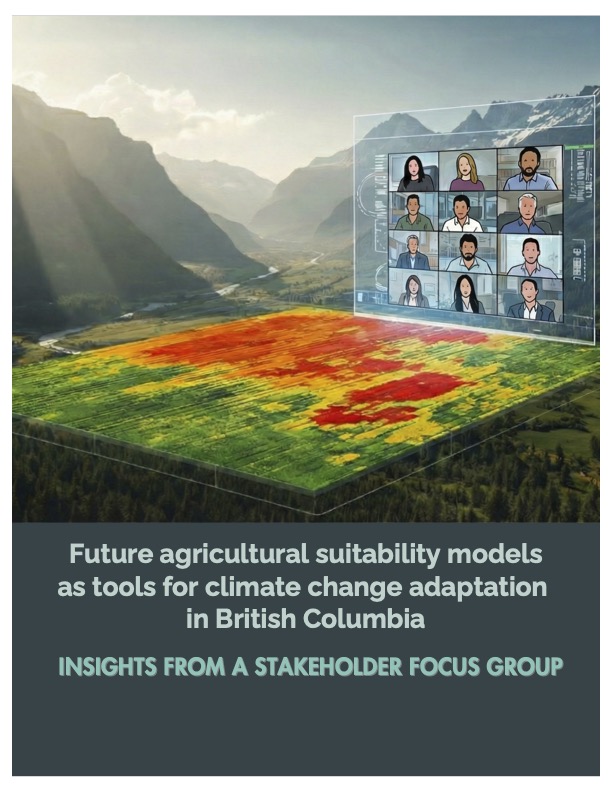
This report summarizes stakeholder focus groups evaluating a model that projects future agricultural land suitability in British Columbia under climate change scenarios. Using climate, land, and property data, the model aims to support long-term agricultural planning and adaptation. Participants—including producers, planners, researchers, and government representatives—assessed its usefulness, limitations, and governance considerations, identifying both its potential and key areas for improvement as a decision-making tool.
Vakhshoori, V., Newell, R., & Glaros, A.(2026). Future agricultural suitability models as tools for climate change adaptation in British Columbia: Insights from a stakeholder focus group. Transdisciplinary Research on Integrated Approaches to Sustainability (TRIAS) lab, Royal Roads University, & Food and Agriculture Institute, University of the Fraser Valley. https://doi.org/10.13140/RG.2.2.22274.75205
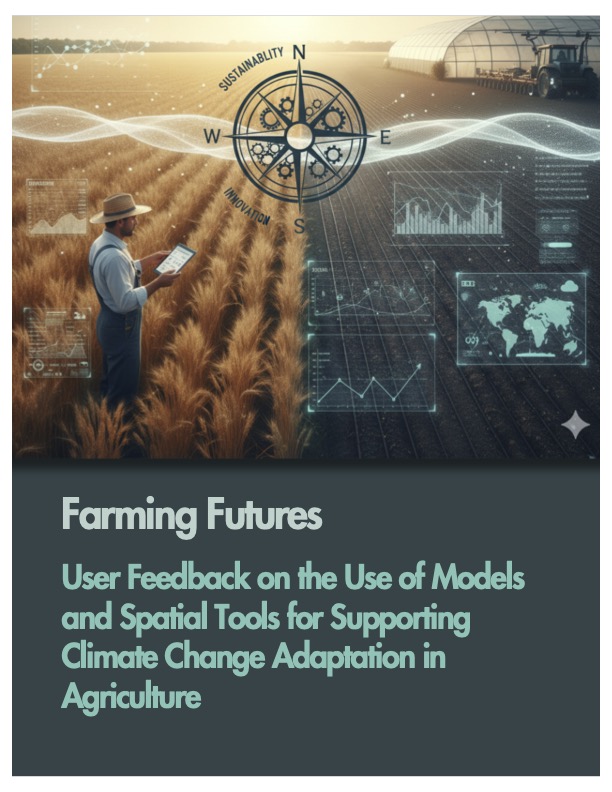
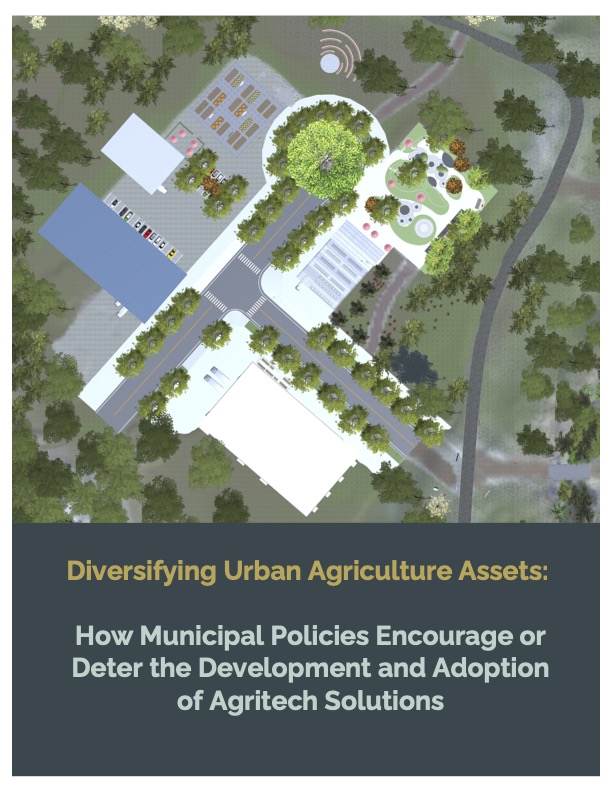
Global challenges such as climate change and geopolitical tensions are increasing the need for stronger local food systems. Emerging technologies like vertical farming and cellular agriculture offer new opportunities for sustainable urban food production, but many municipalities have yet to develop policies to support them. This study analyzes plans and food strategies in Vancouver, Victoria, and Langford, BC, identifying both supportive approaches and policy gaps in enabling urban agriculture.
Motisca, S., Newell, R., & Glaros, A. (2026). Diversifying urban agriculture assets: How municipal policies encourage or deter the development and adoption of agritech solutions. Transdisciplinary Research on Integrated Approaches to Sustainability (TRIAS) lab, Royal Roads University, & Food and Agriculture Institute, University of the Fraser Valley. https://doi.org/10.13140/RG.2.2.14153.20325
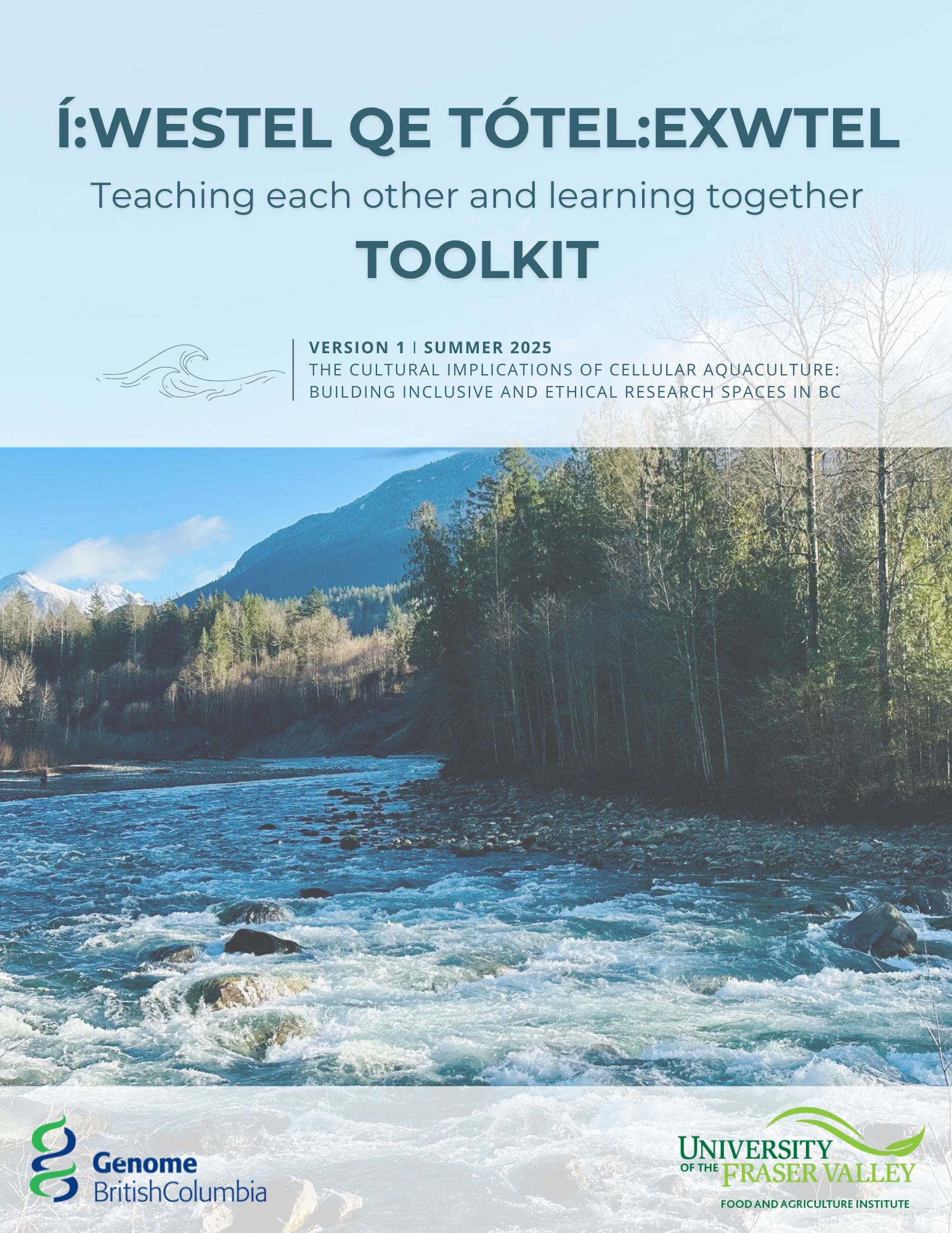
The Í:westel qe tótel:exwtel (Teaching Each Other and Learning Together) Toolkit was launched in the summer of 2025, wrapping up an 18-month research project funded by Genome BC titled The Cultural Implications of Cellular Aquaculture: Building Inclusive and Ethical Research Spaces in BC. Developed collaboratively with, and under the direction of the Stó:lō Community Advisory Council, this first version of the Toolkit serves as a living ‘workbook’ for research engagement. It is culturally specific to Stó:lō rights-holders and documents the Food and Agriculture Institute’s research Team as they journeyed through this research project. The Toolkit is designed with methodology that, with guidance, can be adapted. This work builds into a Toolkit being developed within The Social Implications of Agri-Genomics: Ensuring a Just Transition to Climate-Resilient Agricultural and Food Systems in Canada.
Recognizing that both knowledge and culture are dynamic, the content of this Toolkit may evolve over time. Therefore, we consider this a living document, designed to grow and adapt as new knowledge emerges. We acknowledge that this work is ongoing and never truly complete.
The Innovation Positioning Assessment on Modelling Tools at the Intersection of Agriculture, Policy, Sustainability, and Technology Adoption is a report evaluating the modelling tools developed in this research project. These tools simulate the impacts of climate change and policy scenarios on agricultural technology adoption and sustainability outcomes. The report provides strategic insights to support the commercialization of both modelling tools.
Clark, A., & Lemay, M. A. (2025, June). Innovation positioning assessment on modelling tools at the intersection of agriculture, policy, sustainability, and technology adoption. VISTA Science and Technology. Prepared for Just Transitions in Agri-Genomics Research Team.
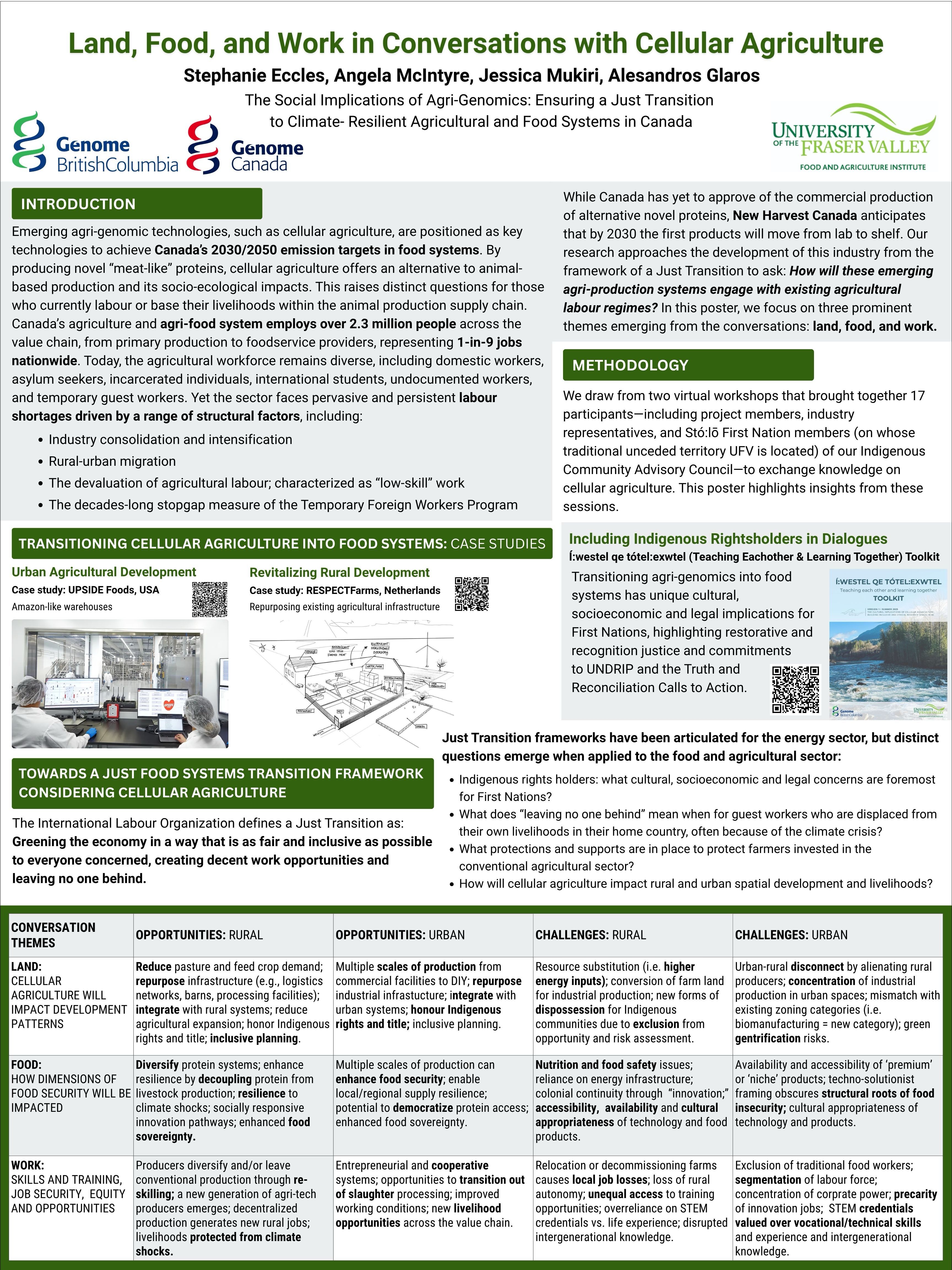
Dr. Stephanie Eccles, postdoctoral fellow, led a workshop series in July 2025 entitled Putting Labour into Conversation with Emerging Food Technology. The group workshops included members of the research project, industry partners, and external research contacts related to the project. The two-day, half-day sessions were conducted on Zoom. The research team presented the project study’s findings thus far, and then the group engaged in a discussion aimed at identifying opportunities and key priorities for advancing a Just Transition in Canada’s food systems with a focus on the role and changing landscape of labour.
Eccles, S., McIntyre, A., Mukiri, J., & Glaros A. Land, Food, and Work in Conversations with Cellular Agriculture. (2025, October). [Poster presentation] Food and Agriculture Institute, University of the Fraser Valley.
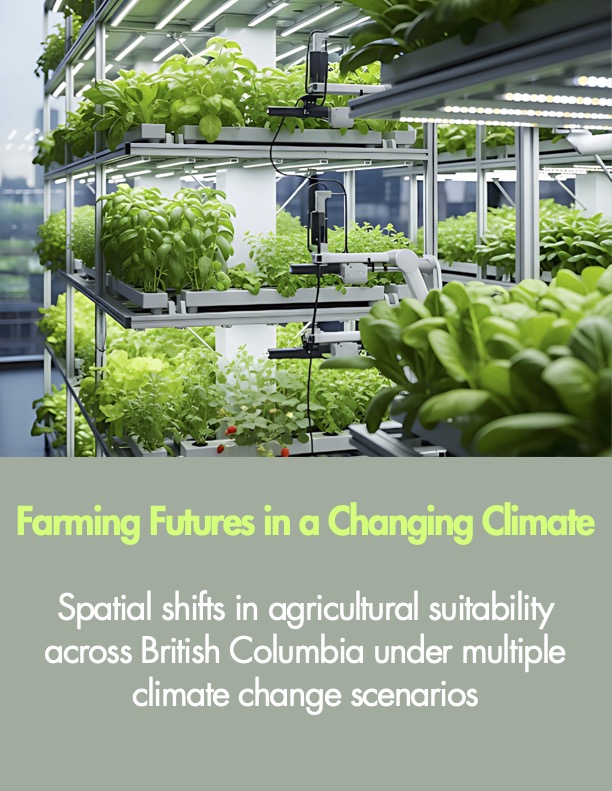
This study evaluates future agricultural land suitability in British Columbia for key crops—cabbage, cauliflower, lettuce, strawberry, kale, broccoli, and celery—under various climate change scenarios. Using spatial modelling and machine learning, it integrates historical crop data, high-resolution climate projections (IPCC’s SSP2, SSP3, SSP5), land capability, and economic indicators to assess suitability through the 21st century.
Results show northward expansion for cabbage, cauliflower, and lettuce in warming conditions, especially under high emissions. Strawberry, kale, and broccoli have mixed outcomes—gains in moderate warming but losses in high-warming scenarios. Celery suitability declines consistently, possibly due to data gaps.
The study provides a method combining geospatial, climatic, and economic data to guide policymakers in identifying new cultivation areas and supporting strategic land use and climate adaptation. The flexible model can be adapted for broader agri-food planning amid climate change.
Vakhshoori, S. V., Glaros, A., Newell, R. (2025). Farming futures in a changing climate: Spatial shifts in agricultural suitability across British Columbia under multiple climate change scenarios. Transdisciplinary Research on Integrated Approaches to Sustainability (TRIAS) lab, Royal Roads University, & Food and Agriculture Institute, University of the Fraser Valley. http://doi.org/10.13140/RG.2.2.17536.55040
Agriculture 5.0 technologies such as alternative proteins, vertical farming, and cellular agriculture, are increasingly presented as solutions for addressing food security and environmental sustainability. The introduction of agri-genomics into these emerging food production techniques offers potential for scalable ways to improve food production efficiency.
To assess the environmental benefits of these innovations, life cycle assessments (LCA) are essential but still underdeveloped. LCA’s capture embodied and operational environmental outcomes, presenting a holistic view of a production process’ impacts. As agri-genomics techniques and tools are applied to emerging agri-food innovations, life cycle techniques afford novel opportunities to discuss their potential tradeoffs with greater transparency and robust data.
This report provides a backgrounder and overview of LCA methodology within mushroom cultivation, cellular agriculture, and vertical farming production systems, highlighting considerations for agri-genomics applications. It also provides recommendations for integrating LCA thinking into accessible decision-support tools to evaluate novel agri-food technologies.
Attrée, E., Newell, R., & Glaros, A. (2025). Intersection of agri-genomics and agriculture 5.0 technologies: Role for life cycle assessment. Transdisciplinary Research on Integrated Approaches to Sustainability (TRIAS) lab. Royal Roads University. http://doi.org/10.13140/RG.2.2.35387.53282