The Agri-tech Park Visualization
Interactive visualization tool of a hypothetical agri-tech park located in Langford, British Columbia, Canada. This tool was developed by researchers from the Transdisciplinary Research on Integrated Approaches to Sustainability (TRIAS) lab, led by the Canada Research Chair in Climate Change, Biodiversity, and Sustainability at Royal Roads University. TRIAS also serves as the co-project lead for The Social Implications of Agri-Genomics project.
This tool will be presented on web-based and virtual reality platforms and presents different scenarios for creating urban agriculture agri-tech parks, providing opportunities for participants of this tool to explore how different agri-technology facilities, such as vertical farming and cellular agriculture could be designed in their communities and neighbourhoods.
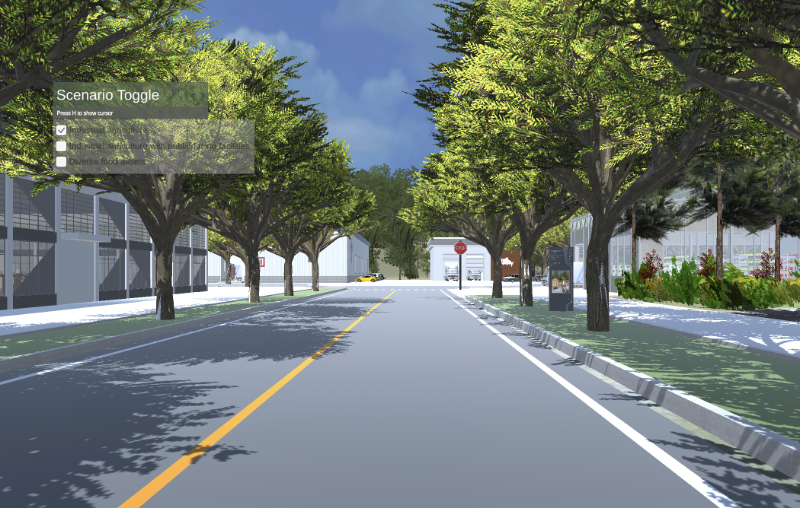 Visualization of Diverse Food Assets in an Agri-Tech Park
Land, Food, and Work in Conversations with Cellular Agriculture
Project team members of the Social Implications of Agri-Genomics research team attended the Cultivating Resilience Summit: Advancing Climate-Smart Agri-Food in Vancouver, BC, presented by AG-ACt, BCCAI, BC ACARN & SFU Public Square. Four team members, pictured below, submitted a poster presentation on their research that approaches the development of the agri-genomic technology industry from the framework of a Just Transition to ask: How will these emerging agri-production systems engage with existing agricultural labour regimes? In this poster, these four researchers focused on three prominent themes emerging from conversations relating to Land, Food, and Work in Conversations with Cellular Agriculture.
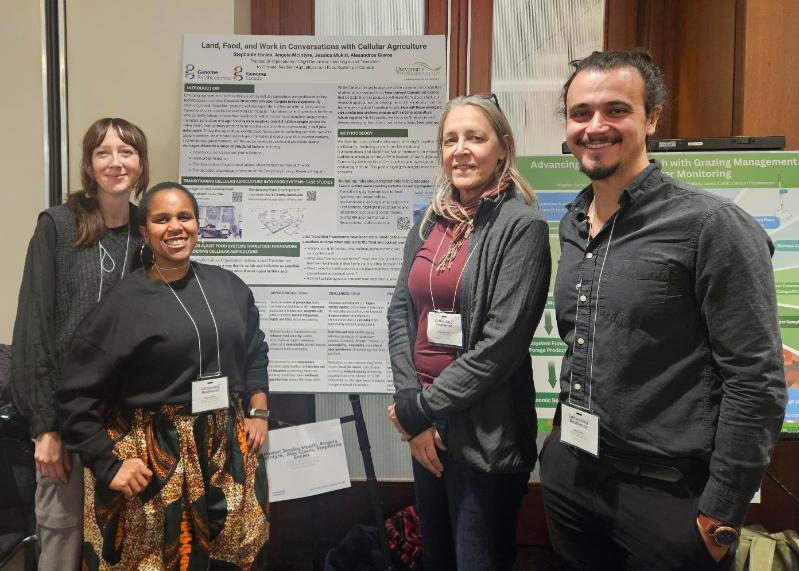 Research team members Stephanie Eccles, Jessica Mukiri, Angela McIntyre, and Alesandros Glaros (pictured left to right), with a poster presentation of their collective research. Cultivated Resilience Summit, October 2025