
Sustainable Food Systems for Canada
Sustainable Food Systems for Canada

Powered by RedCircle
Kate shares insights with us through her extensive knowledge and experience in the BC wine industry, and Alex discusses an exciting new mentorship program that has just launched. Tune in to hear more about climate-related challenges facing BC wine grape farmers, as well as how entrepreneurs and the agricultural industry can collaborate to ensure emerging technologies meet real needs.
Kate is also on our Industry Expert Committee for the Wine Innovation Challenge, acting as a mentor for participating groups. 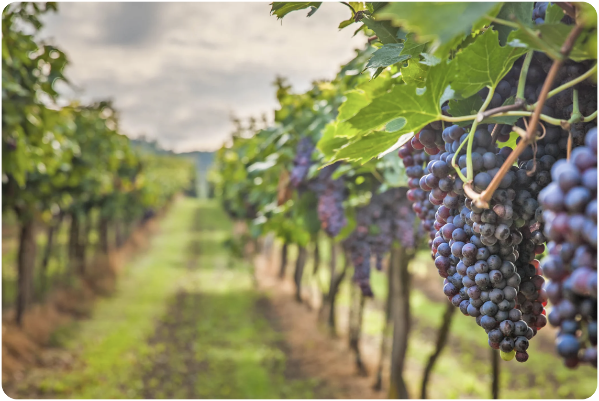

Kate Durisek has an extensive background in corporate administration, marketing communications and project management. In 2012, Kate co-founded Okanagan Epicurean Enterprises Inc. As CEO, Kate is principal liaison on key accounts including an ongoing administrative contract as the Executive Director to the BC Wine Grape Council and Program Director for Sustainable Winegrowing BC. Through her work with these associations, Kate leads all governance and project management work and has recently initiated the creation of the BC Wine Grape Industry Task Force. Kate’s work also extends to ownership and oversight of Okanagan Wine Lab which services over 150 beverage producers and creator of Howling Moon Craft Cider. Prior to starting her business, Kate was employed as a Business Strategy Advisor for BC Hydro Power Smart, Innovation & Technology. She is a certified Project Management Professional (PMP), has her WSET Level 3 Certification and is a Red Seal Journeyman Chef. View Kate's full profile here.
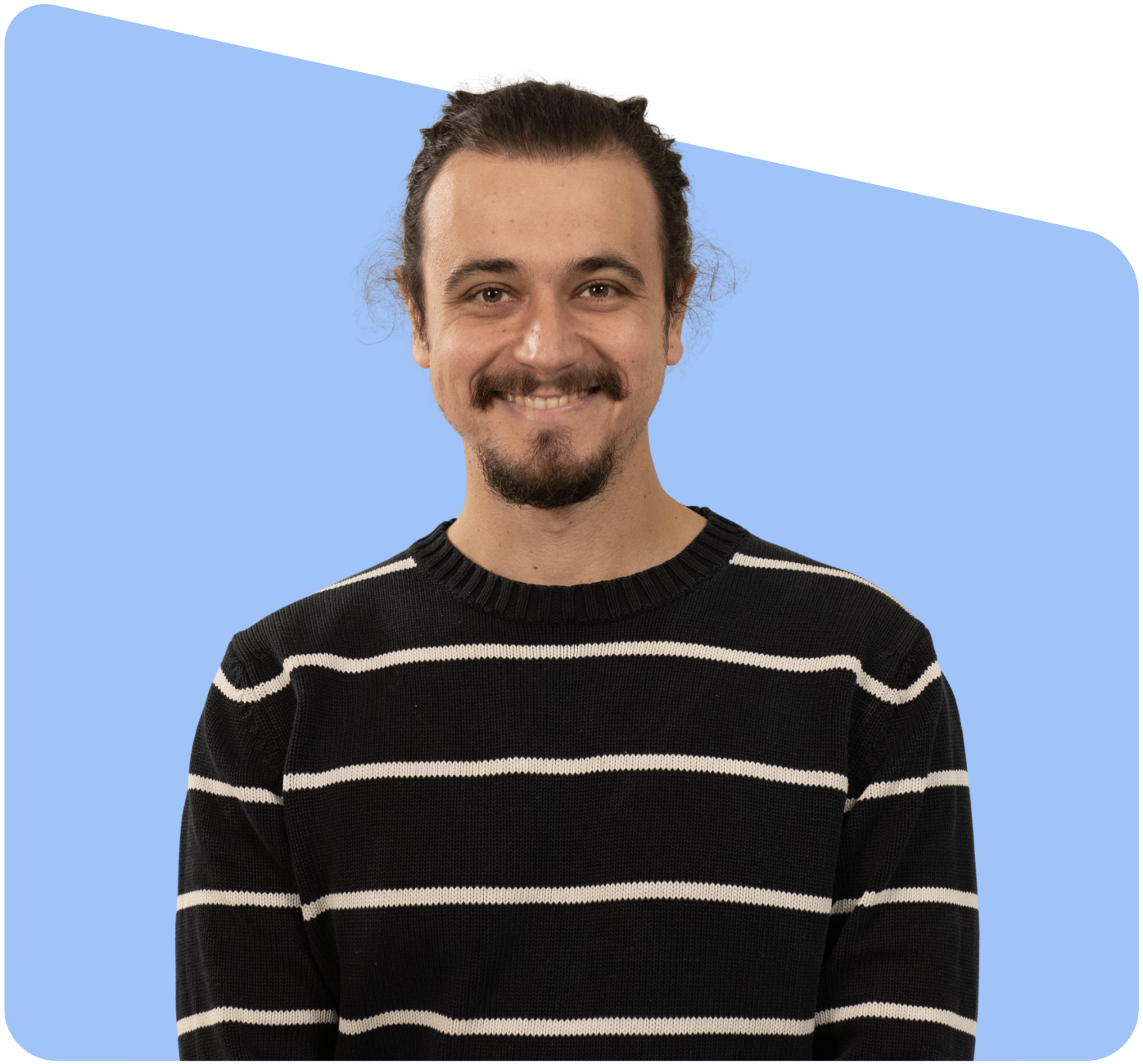
Dr. Alesandros Glaros is a Research Associate and Project Manager at the Food and Agriculture Institute. His research examines the trade-offs and potential for emerging agri-food innovations like digital agriculture technologies, controlled environmental agriculture, cellular agriculture, and edible insects. His research and work aim to connect industry, community, not-for-profit, government, and academic stakeholders to create more responsible pathways for agri-tech development. Currently, he manages programming as part of the Sustainable Food Systems for Canada mentorship platform, working one-on-one with entrepreneurs and industry stakeholders to support emerging innovations with potential for sustainable food systems development. View Alesandros' full profile here.

Cameron James (she/her) is the Communications Specialist with the Food and Agriculture Institute at the University of the Fraser Valley. With a background in Environmental Studies and Sustainable Business Leadership, Cameron has a passion for viewing the world and her role in it through an interconnected, systems-thinking lens. She considers it an honour to play a role in the acceleration of sustainable change through knowledge mobilization, increasing resource accessibility, and amplifying the work of impact-driven thinkers and leaders within her community and beyond. View Cameron's view profile here.
Cultivating Futures Host 00:02
Grounded in experience, driven by inspiration.
[instrumental music]
On this episode of Cultivating Futures:
Kate Durisek 00:15 [clip taken from 13:43]
How are we taking the learning from the lab and getting it out to industry so that they can use it and they can mobilize it? That's absolutely something that we're focusing on and prioritizing. And so anybody who's interested in becoming involved with that in BC, absolutely happy to chat with them more. We do have a virtual event every month where we bring researchers and industry together and just hear a little bit more about what's happening in the lab and what's happening in the field, and how do we match those priorities.
[instrumental music]
Cultivating Futures Host 00:47
Welcome to Cultivating Futures, a podcast dedicated to inspiring and shaping the future of our food systems through sharing the lived experiences of those who have paved the way.
[instrumental music]
Cameron James 1:00
Hi everyone. Today we have the pleasure of being joined by two incredible guests who are going to give us an insight on an industry that I think many of us find particularly interesting, and that is wine. We have Kate Durisek, the Executive Director of the BC Wine Grape Council, and Dr. Alesandros Glaros, Program Manager, Research Associate, and Instructor with our team at the UFV Food and Agriculture Institute. Thank you both so much for taking the time to chat with us today.
I have some questions for Kate that I would love to get into, and I'm sure Alex does as well, just to get a bit of an overview on what the wine industry is looking like today. And then I know we have an exciting new innovation program, which Alex will share more on in a bit. But to start us off, it would be great if you could each tell us a bit about yourself and your current role, and how your work intersects with entrepreneurship in the agri-food and technology sectors. Alex, maybe we can start with you?
Alesandros Glaros 1:54
Yeah, absolutely. Thanks, Cameron. And so lovely to be here with you today, Kate. My name is Alex, I am a research associate, project manager, and lecturer at the Food and Agriculture Institute at the University of the Fraser Valley. My research looks at agriculture technologies – looking at the ways that we can better connect industry with farmers, with academy, with government, trying to make sure that we can play nicely in the sandbox together. And part of the program related to wine that I'll be talking more about in just a bit, is working directly with Kate and trying to connect mentors with early-stage entrepreneurs in the sector who are doing some really, really interesting and cool stuff and trying to get them to the next level. That's me.
Cameron James 2:35
Awesome, thanks so much, Alex. And, Kate, same for you.
Kate Durisek 2:38
Great. Thanks, Cameron, and thank you for inviting me to be part of the podcast today. I'm the Executive Director for the BC Wine Grape Council, and I'm the Program Director for Sustainable Wine Growing British Columbia. The mandate for the council is to facilitate industry investments into research and innovation projects to serve the BC wine and grape-growing community. I've been with the council for about 10 years, and through that time, I've worked with stakeholders and different committees to develop methods to determine where research priorities are for our industry and enable a feedback loop between researchers and funding partners and academic institutions like the University of Fraser Valley. So, really just looking at ensuring that programs and projects are meeting the needs of industry, filling knowledge gaps, and working to enable a more robust, climate-resilient community here in British Columbia.
Cameron James 3:32
Amazing. Thanks so much, Kate. So you're talking about climate as well. I was wondering, what are some of the specific climate-related challenges that the wine industry, particularly, is facing today?
Kate Durisek 3:43
Well, as we can see from some of the recent wildfires and drought pressures here in the Okanagan [that] we're facing in the summer - there's also been an extreme cold event in January of 2024 that wiped out about 94% of the available crops – so, between heat and cold and drought and flooding, as we've seen in the Fraser Valley, I'd say that the more extreme weather is our biggest climate-related challenge. I think we've concluded that we're actively in the midst of climate change. Farmers and producers are grappling with how to deal with the extreme volatility in climate-related issues. So, not being so much as prepared for one type of climate emergency, but being available to weather the storm for an array of uncertainties in climate.
Cameron James 4:32
Yeah absolutely, and I would imagine too when dealing with such opposing issues, that the approaches for navigating one climate emergency may go against another in some capacity, so that’s a major challenge! You mentioned specifically the impact on farmers and producers. How would you say they - and the industry as a whole - has had to adapt to this?
Kate Durisek 4:56
I'd have to say that farmers are some of the most resilient people that I've ever met, honestly. I've personally had many challenging jobs in my life, and I was a farmer for 10 years, and it has to be probably one of the most difficult careers out there. So, I think the way that you know, they weather the storm, I would say that you get into farming because you love it and you really have a passion for agriculture. You are passionate about the land and your community. I think that in wine, I speak with the culturalists and people that work in vineyards. And they just truly have such a passion for being out in their vineyard and seeing their crops grow and going through the season. I'd say that they're adapting through climate challenges, but I think that it's the passion and the community and being resilient - and understanding that nature is unpredictable. Unpredictability is where adaptation begins. Working with your community and being good neighbors and good stewards of the land, I think is really where most farmers are making the biggest changes.
6:06
From an innovation perspective, I'd say that precision agriculture and AI are going to be some of the biggest opportunities. They allow farmers to understand the weather patterns and leverage more predictive farming practices and more precision agriculture so they can really look towards dealing with issues on a very micro level rather than trying to deal with things on a big level. It's more about how do we deal with the problem at hand, right now? And, how do we deal with it in a precise way?
Alesandros Glaros 6:38
Just to jump in quickly - thanks so much, Kate. I'm really interested to hear more about the community resilience aspect of it. I think we talk a lot about innovation systems and being very tech-focused and that's all really exciting too, but there's also the community part of it as well. I'm curious if you could share if there's any stories that popped to your mind on how you see farmers working together to try to address and adapt to some of these challenges.
Kate Durisek 6:58
Yeah, absolutely. Well, as an example, the recent wildfires that we saw in Summerland, there was quite a few farmers that were displaced due to evacuation orders. And really, honestly, the community all just, they came together: helping with mental health issues, helping with places to live, helping with dealing with livestock, and getting back into their properties, cleaning up and just being really supportive neighbors. I honestly don't think that people would have rebounded as quickly as they had without having that community behind them. Even equipment and going out to water the crops if they can or check on things. Some people were kept out of their properties for a while and others were let in. Just really being there to back each other up. It was heart-wrenching to see, but it's also heartwarming to see that the community comes together to support each other.
Alesandros Glaros 7:50
Well said, thanks, Kate.
Cameron James 7:52
Yeah, absolutely. It's not a solo venture, right?
Kate Durisek 7:55
Exactly.
Cameron James 7:56
You need that community, that's crucial. And you were mentioning too, having to really look at what problems are arising in the moment and addressing those on a more, maybe smaller scale. I would imagine too, all of these added climate-related challenges, probably makes it even more crucial for entrepreneurs to be able to frequently pivot and think of new ideas. Do you have any examples, whether it be a success story or more of a learning moment that you would be able to share with us that you've seen?
Kate Durisek 8:25
I think that entrepreneurs by nature are very adaptable and I think that if you're working to commercialize a product, or a technology, or some new innovation, you really have to be at the forefront of ”why do people want to use this new innovation?“ What is it that you are bringing to the industry that will enable them to do their work better, more efficiently, more economically? Whatever the benefit is, I think that it's really critical to lock that in and understand that it's not about just economics, for the most part. It really has to be about fulfilling a need and overcoming a challenge in agriculture. Honestly, farmers don't have a lot of time, and they really do need support. So, the more that entrepreneurs can do to be, you know, to position themselves as coming up with a solution to a problem, the better off they will be, ultimately, and the more successful they will be.
9:29
I think that understanding regulatory and production challenges is super important. I've seen some products come to market that people don't always understand the regulatory environment of having a new product come into Canada, and it can be a really long process. And so, the sooner that an entrepreneur has an idea, and they're interested in bringing that to industry - start demonstrating it, start showing it, start going through the regulatory procedure of bringing it to market. It can be a long path, right? And so, I think just being involved as quick as you can and understanding: What are the economic benefits to my customer? What is the path for me to get this to them as quickly as possible? And how do we work together with academics and researchers, and industry to commercialize a new venture or a new product? Because there are a lot of opportunities.
10:22
When we look at precision agriculture, and in particular, if we look at irrigation as an example: Historically, there was a lot of overhead irrigation that farmers were using in the Okanagan. We understand that that's not really the best use of water here, it's moved to more of a drip irrigation system, and even that is not really seen to be as beneficial as it once was. Now I'm seeing precision ag., where you have sensors in the vineyard and you can actually map your vineyard to see where spots for enhanced irrigation is needed, or maybe there's more moisture in one area than there is in the other. You can have emitters that are watering based on need, so we're not actually overusing our precious water supply either - we're actually irrigating right to the level of where that plant individually needs it. And so, things like that, I think are really, they're important for climate, they're important for farming, and they're huge opportunities for entrepreneurs to keep building climate-resilient products and innovations for our community.
Alesandros Glaros 11:25
I've talked to a lot of entrepreneurs, some of them come from farming backgrounds, some of them have never even set foot on a farm, but are working in the agricultural space, and I'm curious, what are those strategies to get entrepreneurs to really know what those industry needs are? What are some examples that you could point us to?
Kate Durisek 11:43
Yeah, that's exactly where my position lies within the BC wine grape industry. And it can be challenging. One strategy that we've employed recently is to form a wine grape industry task force. And it's a culmination of our five industry associations that serve the wine grape growing community across the province, so on the Island, in the Fraser Valley, Okanagan Valley and emerging regions. And we've come together to form this task force to look at the issues, and Climate Resilience is one working group that we've formed within that task force. Inside of the Climate Resilience working group, we have prioritized - and this is an industry-led working group, so these are farmers, they're wine makers, they're producers - they've come together to develop priorities that they see as needed and where they want to go. And so, we do have a website that we've created for the task force, bcwinegrapeindustry.com, and I will send that to you guys as well.
12:44
But the need that had been identified within this Climate Resilience working group is really around creating a feedback loop. What is the mechanism for industry to say, ”these are our priorities, these are our research priorities“, and then actively get those out to researchers, to the academics, but then also hear back from the researchers and the academics on: What are the project opportunities that are happening within their lab? What can they do, functionally, within their lab? What are their areas of interest? And what can we do to bring those voices together, to unite them, and then actually get some really tangible results out to industry through coordinated knowledge transfer - because that's the other side of it that can be challenging. There's a lot of research that happens, and it's in the lab, and it's core research, we'll call it, but I do think that there's a need to have a strategy around applied technology and transition from that core research to demonstrations, and then also knowledge transfer --
13:43
How are we taking the learning from the lab and getting it out to industry so that they can use it and they can mobilize it? That's absolutely something that we're focusing on and prioritizing. And so, anybody who's interested in becoming involved with that in BC, absolutely happy to chat with them more. We do have a monthly Third Thursdays, it's a virtual event every month where we bring researchers and industry together. It's an open opportunity and open forum to bring that community together as well and just hear a little bit more about what's happening in the lab and what's happening in the field and how do we match those priorities.
Alesandros Glaros 14:18
That's amazing and I don't even want to see your calendar, I imagine. And I love the idea of the feedback loop because I feel like a big critique of it has always been kind of, not a one-sided pipeline, but where you get a lot of really cool stuff that's being developed and researched in university labs, that will go out to the world and they're like, ”oh, we created this really cool solution“, but maybe to a problem that doesn't even exist. And so, when you have the actual farmers and producers who are able to iterate on those and to bring each other into conversation, it's just more efficient and it's also a little bit more responsible use of public dollars in the university system, in my opinion at least. So, it's really cool to hear what you're doing with that. That's amazing. Thanks.
Kate Durisek 14:56
Yeah, absolutely, and I think it's also sometimes there's a need for knowledge translation. So, when we look at, you know, academic papers or publications, they can be quite high-level, and I think that it's translating what are the learnings from this project that are actually something that can be applied and meaningful to a farmer or somebody maybe that doesn't have as much insight into whatever the topic is, right, at the academic level. So, speaking to the audience and having that translation opportunity, I think, is really important for us as well.
Cameron James 15:30
Yeah, absolutely. That's crucial. That's something that I felt too, like even just being in the university space. That's like, how do we get this out there to be more accessible to more audiences? It’s so important, so I'm glad you touched on that.
Alesandros Glaros 15:43
Absolutely.
Cameron James 15:44
I have another question. So, you sit at the intersection of business and the environment. And I was just wondering, could you tell us a bit about the opportunities for integrating environmental goals into business practices?
Kate Durisek 15:58
Yeah, I think that applied technology is really where that intersection sits. I think that demonstrating new opportunities and new innovations and really getting out there and trialing whatever that new product or new innovation is and working with the farmers and understanding how that could directly benefit them. Or maybe it's more of a hindrance. Maybe something starts as a really great idea, but then when you actually try to apply it in real life, it's not going to come together the way that had, you know, been modeled at a small level. So really actively trying to get out and apply the technology in a real-world example is where that comes together.
16:38
I can actually speak from the space of Sustainable Wine Growing BC, when we look at business practice and environmental opportunities and developments. Sustainable Wine Growing British Columbia has essential criteria that are published on the website, sustainablewinegrowingbc.ca. There are criteria developed specifically for vineyards and there's criteria developed for wineries. And really what it comes down to is encouraging our membership to develop action plans for dealing with things like integrated pest management, setting goals on how to track and analyze your inputs into your business and your farming operation, and then developing goals on how does that individual business perceive themselves as being able to become more environmentally aware and become better stewards for the land and make commitments around people and place and profitability.
17:35
I think looking at those essential criteria really is a great opportunity to see where there's opportunities to bring innovations to support these businesses in achieving the goals of sustainability. Really specific thresholds that are identified in the essential criteria, and a lot of businesses might be halfway there or, maybe they're employing a lot of these practices and they just don't actually realize that they're doing a lot of things sustainably within their business operations.
18:06
I would highly encourage any entrepreneurs that are moving into this space to have a look at some of those essential criteria and see what we as an industry have developed as goals for sustainability and environmental stewardship, and then talk with customers or prospective, and people within the industry that could be customers and see where those entrepreneurial ideas could support them in achieving those essential criteria. I think it's a great space just to learn about what we want to do and where our gold standard is for sustainability and environmental stewardship.
Cameron James 18:38
Yeah, absolutely. And I'm sure it varies too, but I am just curious, what do you feel like tends to motivate growers the most to adopt these more sustainable practices? Would you say it's primarily economics, or environmental stewardship, consumer demand, regulations? What do you tend to see being the most?
Kate Durisek 18:56
Yeah, I'd have to say that it's like any kind of market adoption cycle. So, you're going to have your early adopters that are just really passionate about being better environmental stewards and being more sustainable, or they just have a really internal-driven need to be those early adopters and to make the change in their organizations.
19:18
And then, as you get through the chasm of moving from that early adopter group over to a more widely adopted group, it's going to just be different motivating factors. Accessibility to technology, peer endorsement. So, you know, over the fence if their neighbors are saying, hey, this is really working well for me and you ought to try it, and they can see the success of some new adoption or some new practice that their neighbors are doing, that's going to really go the distance to help the next segment, adopt or trial some new products, right?
19:56
And then it comes into cost. Really, I mean, farming is very expensive. Farmers are operating on very thin margins. In particular, when we look at the potential of losing a crop potentially to fire or frost or flooding, and so, how is that going to save them money? Whatever the innovation is, you really need to do a deep dive on the economic impact and opportunity and the return on investment for that product or the adaptation for the farmer or the customer, because ultimately, that's going to really be the thing that sways, I think, the larger majority of people. And then the final, the laggards, regulatory is going to bring them up into the, they have to, they have to adopt, they have to take the technology or the new adaptation on.
20:43
One thing that I can see is driving a lot of the uptake for our Sustainable Wine Growing BC program is regulatory or purchasing stipulations from large buying groups that they will only purchase or they will prioritize purchases for products that are made in a particular way or that use certain sustainable practices. It's a broad scope at this point, but certainly we're working with large buying groups to help inform them about the benefits of more sustainable farming and then therefore open opportunities for farmers that are adopting those within our province. So yeah, it's a little bit of everything, I'd say.
Alesandros Glaros 21:23
To follow up quickly on that, if that's okay, Cameron. Yeah, I'm curious on that. And you mentioned precision ag. and AI and that, and I think what you're just mentioning, on the buying groups requiring some evidence of sustainable practices, and that I think is fascinating. I'm wondering, on the data side of things, are you seeing farmers, producers - how have you seen them engage with collecting data and disseminating, and are there some possible opportunities to make that easier in the space? I'm just curious.
Kate Durisek 21:50
Yeah, absolutely. I think decision aid systems and predictive modeling are the future of farming in British Columbia and certainly across Canada. When you look at federal research priorities, we're seeing a lot of talk about supporting decision aid tools and decision aid systems, right? And it's not about just relying on the decision aid, the tool to make the decisions for you, it's an aid, right? It's not about telling farmers not to go and still walk their properties and make informed decisions, but what we can do is look at things like climate trends, we can look at weather stations and weather forecasting, and we can look at predictive modeling around the best time of application for certain sprays.
22:37
We can look at satellite imagery and really looking at the farm as a whole space, but then individual rows. There's satellite imagery that we're looking at right now, you can get to within, I think it's 10 meters of a of a plant and see which plants need more attention than others. And so, when we look at sustainable farming practices and precision ag., it's much more efficient and cost effective to perhaps only apply a spray to a section of property that might need it versus just doing a broadcast spray across your whole property or irrigating a particular section versus the entire farm as a whole, right? And so, I think that absolutely, that's where we're going to be going. Satellite imagery, predictive modeling, AI for the purposes of decision aid is, we're only on the very forefront of that right now.
23:26
And I see that just really being an opportunity, but not to replace the actual critical thought of farming, because I don't think we're there yet. And again, that speaks back to why people get into farming: Because they love the land, and they love being part of that cycle of growth and being out in nature, right? And so, while we have robotics and AI and data capture, we also have boots on the ground and people that really just love being in nature and being in the farm and the community. So, it's bringing those things all together and you can't replace one with the other, I don't think.
Alesandros Glaros 24:04
Amazing. Thank you.
Cameron James 24:05
Yeah. I love that you touched on that too. It's really about merging those two together in an appropriate, responsible way. So, Kate, you've already mentioned lots of opportunities and meeting industry needs and gaps. But do you have any final kind of areas of opportunity for folks interested in entering the wine space that you wanted to touch on before we wrap up today?
Kate Durisek 24:27
Yeah, just really reinforcing the benefit of being involved in the conversations with industry and with researchers. We have a lot of opportunity to engage with our communities through BC Wine Grape Council Third Thursdays, through our newsletters, through Sustainable Winegrowing BC, and through our Wine Grape Industry Task Force. So just looking at what's coming out of those spaces and being really in tune with what industry wants, what researchers are developing.
24:56
Also looking at what is actively available through open-source content, because I think that it's important to understand how to leverage open source, but not try to monetize something that could already be available to farmers for free or will likely have the ability to be that open-source space in the very near future.
25:17
But if I could leave any kind of take away, it's just get involved, show your product, talk to farmers, get through the regulatory hurdles early, start that process as quickly as you can. And then, just be involved in the community of the customer base that you're seeking to engage with.
Cameron James 25:35
Yeah, amazing. Thank you so much. And we'll absolutely be linking all of those resources that you've mentioned in this episode's resources. That's great. Thank you so much, Kate.
Alesandros Glaros 25:44
Thanks Kate.
Cameron James 25:45
And now, shifting to the question for Alex. So, you've designed a new mentorship program, speaking of opportunities, called the Wine Innovation Challenge, which Kate, you're actually a mentor for. Alex, could you describe the program and how you're hoping that it's going to respond to these industry challenges and needs that Kate has been describing for us?
Alesandros Glaros 26:07
Yeah, absolutely. Thank you, Cameron. Yeah, so the Wine Innovation Challenge is an innovation program as part of the Sustainable Food Systems for Canada National Network, it's a national network of about 16 different universities. If you've read the show notes for this, you'll know what that is. But basically, what we're trying to do here is bridge the gap between folks who are leaving the university space or who have just left the university space and who are ready and willing to engage with industry and be part of the agri-food industry.
26:37
So, for the Wine Innovation Challenge specifically, we have some early-stage entrepreneurs who have some really cool ideas and are a little bit at the earlier stage, and they're just looking for that extra support to try to enter into the wider network. And that could be either going out on their own or it could be working with all the other amazing incubators and accelerators across Canada, like Bioenterprise, CFIN, Kane, Creative Destruction Labs, etc.
27:00
And so, the way that we've structured it, it's about a six-month program. We have some fantastic mentors like Kate, who has kindly agreed to support it, and we match those mentors with the entrepreneurs, work through some workbooks and guided questions, and it culminates in a sort of a business showcase and pitching competition event. Think Dragon's Den, but maybe Farmer’s Den kind of style thing. So that will be in early February. And yeah, we’re trying to sort of smooth the process for you as you move from the lab to the market. And so again, just that goal is to try to really support, bridge that gap between the university ecosystem and the industry for those earlier stage companies.
Cameron James 27:40
Amazing. Yeah, and Kate, too, is there anything that you would like to add from your own experience with mentorship opportunities similar to this? Any success stories, anything that you would like to add about the value that these kinds of programs can offer.
Kate Durisek 27:56
Yeah, I think there's a lot of generational transfer within farming and so focusing on learning and extending knowledge from an older demographic and one that's transitioning out of farming and then being able to transfer that knowledge to a new, younger demographic that may be working to take on the farming operation or whatever the program is.
28:21
I know the BC Agriculture Council has a young farmers initiative, and I would really encourage people who are new and interested in farming to get involved with those young farmer groups. They look at land sharing opportunities; they look at generational knowledge transfer opportunities. I really do think that we need to make sure that we're not losing knowledge and insight into the land, and how to farm the land and farming practices, as we have people retiring and moving out of that space.
28:53
So, anything we can do to support generational knowledge transfer, and new entrants coming in, I know it can be very challenging for somebody coming into farming who maybe doesn't have the capacity to buy a large piece of land or to buy all the equipment and all of those things. But there are mentorship opportunities for older farmers to transfer their knowledge and support generational transfer of land and equipment and all sorts of things. There's a lot out there. So, definitely things to look into. And I know the BC Agriculture Council really supports that as well.
Cameron James 29:27
Amazing. Yeah, those are excellent points. Thank you so much. And, Alex, so this program in particular is focused on the wine industry, but are there going to be other opportunities similar to this that folks can look out for?
Alesandros Glaros 29:39
Yes, absolutely. So, we - as a little bit of a teaser because it's not formally launched yet - if you are in the greenhouse space and controlled environment agriculture, there will be some programming coming out for you in the coming months. And related to that, we're also looking at some blue economy type programming as well. So, if you are in the blue economy space, an entrepreneur in there, stay tuned and we'll post the link to all the mentorship-related programming as a website in the show notes for this as well.
Cameron James 30:08
Amazing. Yeah, I'm looking forward to following the journeys of these groups as well. It's going to be really exciting. Well, thank you both so much for taking the time for such an interesting and thoughtful conversation. I'm really looking forward to seeing the progression of the Wine Innovation Challenge and the impact that opportunities like this can have. So, thank you so much.
Alesandros Glaros 30:25
Thanks so much, Cameron. Thanks so much, Kate.
Kate Durisek 30:27
Yeah, thank you both.
[instrumental music]
Cultivating Futures Host 30:31
Thank you for tuning in to this episode of Cultivating Futures.
Cultivating Futures is a podcast hosted by the Food and Agriculture Institute, brought to you through the Sustainable Food Systems for Canada network.
The Food and Agriculture Institute is an interdisciplinary research centre at the University of the Fraser Valley. We gratefully acknowledge the honour of being situated on the unceded traditional territory of the Stó:lō peoples, who have been stewards of this land since time immemorial. We are also proud to be the West Coast Innovation Node of Sustainable Food Systems for Canada, a national innovation and entrepreneurship network bringing industry leaders and learners together.
For more information on the programs offered, and how you can become a part of this connected network of agri-food and tech leaders, visit sf4c.ca.