
Sustainable Food Systems for Canada
Sustainable Food Systems for Canada

Powered by RedCircle
Amy shares her insights towards the importance of mentorship and where faculty can best support, in addition to barriers faced when starting your agri-food ventures, the directionality of research, intrapreneurship, and success stories from her students.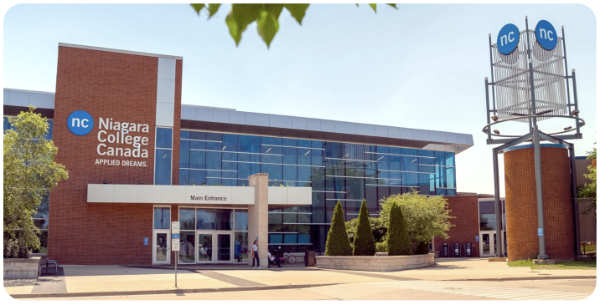
Ontario Summer Company
https://www.ontario.ca/page/start-summer-company-students
Canadian Food Innovation Network (CFIN)
https://www.cfin-rcia.ca/home
Technology Access Centres (TACs)
Futurpreneur
https://futurpreneur.ca/

Dr. Amy Proulx is a food science educator, curriculum specialist, and international consultant with over two decades of experience in food processing, vocational education, and applied research. She currently serves as Global Leader for International Research and Innovation Initiatives at Niagara College, Canada, and is Professor and Program Coordinator for the Culinary Innovation and Food Technology program. Dr. Proulx holds a PhD in Nutrition and Food Sciences from Iowa State University, an MSc and BSc in Food Science from the University of Guelph and is a Canadian Certified Hazard Analysis and Critical Control Points Professional.
Dr. Proulx has led curriculum development and modernization initiatives across Canada and internationally, including work with Global Affairs Canada, Colleges and Institutes Canada, and the United Nations Food and Agriculture Organization. Her expertise includes competency-based education, food safety management, food innovation systems, and institutional capacity building. She has led over 200 industry projects focused on product development, regulatory affairs, and commercialization strategies for small and medium-sized enterprises, with her work integrating applied research with course-based learning and industry engagement.
Dr. Proulx is also a team leader for technical training for agriculture and food systems in the Sustainable Food Systems for Canada network.

Ramneek Dhunna is a University of the Fraser Valley (UFV) graduate with a Bachelor of Environmental Studies in Natural Sciences and a certificate in Geographic Information Systems. Her research, notably on the socioeconomic impacts of secondary suites on Agricultural Land Reserves, has been presented at academic conferences. With a background in urban forestry and contaminated site management, she has contributed to diverse environmental initiatives, including the Ocean Heroes Network. Ramneek worked as a researcher at the Food and Agriculture Institute at UFV with a primary focus on One Health. View Ramneek's full profile here.

Dr. Alesandros Glaros is a Research Associate and Project Manager at the Food and Agriculture Institute. His research examines the trade-offs and potential for emerging agri-food innovations like digital agriculture technologies, controlled environmental agriculture, cellular agriculture, and edible insects. His research and work aim to connect industry, community, not-for-profit, government, and academic stakeholders to create more responsible pathways for agri-tech development. Currently, he manages programming as part of the Sustainable Food Systems for Canada mentorship platform, working one-on-one with entrepreneurs and industry stakeholders to support emerging innovations with potential for sustainable food systems development. View Alesandros' full profile here.
Key Topics
1:33 – Guest Introduction
4:54 – Vocational schools and colleges help advance agri-innovation and entrepreneurship by prioritizing career-readiness
7:02 – Emphasizing their role as public servants will help Canadian universities find more success in translating research into commercial ventures
9:55 – How perseverance and realistic self-assessment set students up for success in entrepreneurship
11:24 – How learning innovation and entrepreneurship skills benefits agri-food students regardless of their career trajectory
17:43 – What makes an innovation more likely to be adopted, and how colleges foster entrepreneurship on a shorter timeline than universities
21:45 – Barriers that prevent research from being translated into viable businesses
24:52 – When to start thinking about intellectual property
27:40 – Finding the right mentor to guide you through your entrepreneurship journey
31:44 – What you should be doing now to position yourself for success in entrepreneurship
Full Transcript
[instrumental music]
Cultivating Futures Host 00:02
Grounded in experience, driven by inspiration.
On this episode of Cultivating Futures:
Amy Proulx 00:13 [clip taken from 12:58]
You have to be ready to rely on the help of other people, and you’ve got to be willing to know what you know, and know what you don't know, and know the difference between the two. We just encourage entrepreneurs to have the courage to ask for help, because there is a lot of help out there.
Cultivating Futures Host 00:37
Welcome to Cultivating Futures, a podcast dedicated to inspiring and shaping the future of our food systems, through sharing the lived experiences of those who have paved the way.
Ramneek Dhunna 00:51
Hi Amy, thank you so much for joining us today on our podcast. We're thrilled to get the chance to talk to you about your journey, and expertise in the agri-food sector, that I believe will be really helpful for students and agri-food entrepreneurs that are in the early stages of their careers, but also for those in the university space. And so, the overall conversation today is around what the role of modern-day universities looks like in advancing entrepreneurship in the agri-food sector. And so to start off for those tuning in, our first question is, tell us about yourself! Can you briefly introduce your current role and how your work intersects with entrepreneurship in agri-food and technology sectors.
Amy Proulx 1:33
Excellent. So, my name is Dr. Amy Proulx and I am currently the Academic Program Coordinator for Food Technology and Innovation Programs at Niagara College. And so, when you introduced it and said, what does it look like in the university space? I am going to preface it and say: I'm going to speak about colleges and institutes in Canada, knowing very well that I do a lot of collaborative work with the university space as well. There's a whole spectrum of post-secondary institutions in this country, and we all have a really important role to play when it comes to supporting the agri-food sector.
2:05
So, what's my role? I oversee academic programs that relate to food and beverage manufacturing. At Niagara College, one of our premier programs is related to food and beverage. We started with a culinary program back in the 1960s of all things. That said, Niagara is Canada's premier wine destination – nothing against our friends in Okanagan – we do have the largest concentration of wineries in the country, and so, we developed a wine program to complement our culinary, 25 years ago. And from there, we were like, “Well, wait a second, what about beer?” And then they were like, “We have all the science and technology, what about that?” So that's my role. Most recently, I've been working with our Bakery Management programs and our Butchery programs on introducing science and technology.
2:55
The other role that I play at Niagara College is that I was the founder of the Food and Beverage Innovation Centre, which is a federally funded, NSERC (Natural Sciences and Engineering Research Council of Canada) funded, Technology Access Centre. The Technology Access Centres movement is something that's unique to colleges and institutes in Canada. These are centres that are funded by NSERC, with a range of different funding models – we don't just rely on a single funder to be able to keep the doors open; we have participation from IRAP (Industrial Research Assistance Program), from the province – and these centres provide support to entrepreneurs, to startups, as well as to large businesses.
3:32
This morning, I was on the phone with a very large multinational, talking about different technologies from a coaching and mentoring perspective. We always have this intersection in the colleges sector here in Canada, that everything has to have three points of interaction: The students are our anchor, and industry is the other anchor – everything has to have that double alliance; everything that we do. And then, of course, the faculty are the curators of those relationships. Whether that's working in our Technology Access Centre, or in our academic programs, we always have those three key components. I like to think that I get to hang out with entrepreneurs every single day. People call me up as part of my continuing role with the Food and Beverage Innovation Center. I get to do a lot of the activities that are hard to monetize. So many of the coaching and mentoring and advisory roles... those are difficult to monetize. How do you monetize a 10-minute conversation? But that 10-minute conversation can often be setting people on the right track, with the right technology, with the right regulations, with the right tools to be able to go and succeed. And I feel very privileged to be able to do that sort of work every single day.
Alesandros Glaros 4:44
Thank you so much, Amy. I have a quick follow-up question; if that's okay, I'll jump in.
Amy Proulx 4:47
Sure! Absolutely.
Alesandros Glaros 4:48
I'm really curious – like you said, there's a whole spectrum of all kinds of post-secondary institutions across Canada. What do you think is the unique value of these vocational schools, colleges, in advancing agri-innovation, entrepreneurship in the country compared to some of the larger scale research institutions and universities?
Amy Proulx 5:05
I love universities. I'm a product of the university space, but I also grew up on a farm, and practical problem solving has always been where I've been rooted. And so, we really focus on practical problem solving. What's really interesting, is that many of our students at the college's level are university graduates. And they come to us because they've gotten a really amazing theoretical background in a domain that they're super excited about but transferring it into job-ready skills is often a challenge. And so, as I mentioned, colleges are very focused on industry, and we integrate the industry and very practical teaching into all of our activities. As such, many of our graduates are coming with bachelors – and not many cases, but a good number of cases of masters and PhDs – coming back to college to prepare for the workforce.
5:57
At Niagara College in particular, we have our food programs. Many of them are related to food manufacturing, many of them are also related to food service and retail, hospitality, restaurants, and so on. We also have programs in horticulture and agriculture. We have excellent greenhouse programs. We have programs in cannabis. In the past, we had programs in beekeeping. And so, these programs are running that entire spectrum. If you continue down that value chain going backwards, we've got programs in environmental remediation, environmental monitoring, and these all have roles to play. If we want to move it forward, we've got programs in business and marketing, and many of our graduates end up in different food manufacturing or distribution companies. And so, I think our role specifically that's unique, is that job readiness. It's not that we're not preparing people to be interesting and intellectual citizens, but our primary priority is career readiness.
Ramneek Dhunna 6:55
Yeah, no, it's great to hear, Amy. It's great to hear what programs are offered and how interdisciplinary they are across various different departments. I also want to ask, there's a common critique that Canadian universities excel at research but struggle to translate that research into commercial ventures. In your experience, where does this critique hold, and where does it miss the mark?
Amy Proulx 7:19
I often think about the directionality of research. I have a PhD, and I was a research scientist within the federal government for a period of time, and that culture of “Who are the experts?” it was very much, “We're the experts. We are the scientists. We are the ones with the PhDs”. And... I grew up on a farm, and I know how smart many of my neighbors were, and just how resilient – they were so good at persevering and coming up with solutions. And that aspect of who is pushing the research agenda, I think is a key part of it. I know that universities right now are really reflecting on the fact that they need to have strong industry collaboration, and they need to have more of a demand-driven approach to research. Now, does that mean that we should get rid of creative and boundary-pushing research? No, I think we still need that. Because sometimes the research community really does pull the agenda forward. But in other cases, research needs to really have a purposefulness and that's driven by the sector. And so, making sure that that industry integration is there. Within the colleges, that's our entire purpose. We've been doing this for decades.
8:27
So, for me as a PhD researcher, when I first joined about 15 years ago, it was really a bit mind-boggling for me to not be the person who came up with the research agenda. My job was to sit back and wait. And so, I had to go and build up social capital, go out to conferences – but not push my own agenda, but instead say, “So what are some of those prickly problems that you've got? How could we be helping you with your prickly problems and help turn them from problems into opportunities?” And that was my job, to use our NSERC funding to help solve those problems. And it was really great – I felt a little bit like a psychologist with a sofa – “Lean back, tell me what's wrong.” It was a ton of fun to have that situation, to say, “Wait a second. We are public servants. We are paid by public dollars. We should be solving challenges that the public are facing.” And one of our key problems in the agri-food sector is productivity. How can we help companies innovate? How can we help them solve their problems, get on with hiring more people, making new, better, value-added products and helping create a really robust food culture for our country? So, now that's our entire ethos. And the nice thing is we are not lacking for funding; we are very successful in garnering ample funding from various federal government and provincial government programs to be able to continue to support this model.
Alesandros Glaros 9:52
A lot of that really resonates, Amy, with our own thoughts. Would you think it's a fair summary to say that, oftentimes researchers don't really have a good sense of what the actual problem is? Do you think that's a fair statement to say?
Amy Proulx 10:03
Yes. Without naming names, I was on a call with a good friend of mine who's a researcher at an unnamed university. And just yesterday, we were talking about some different pieces of manufacturing technology, and he was like, “Well, I found a used one over here in this one location”, and I'm looking at it going, “Oh, no, there's no way you could even get that installed in Canada, because it's missing a TSSA certification, it's missing a CSA certification, it's missing these key components, and you're going to spend more money on getting this equipment re-certified, plus shipping from another foreign country, plus commissioning costs – You're going to spend way more on the ancillary cost than on the equipment itself. Just buy something in Canada, please.” This is stuff that my first-year students know. How does this person who has a PhD, plus 20+ year career, not realize that this is incredibly urgent to do? That aspect of reality check, I think is really important. That having your boots on the ground to be able to solve problems, especially in such a practical field as agri-food, you really have to have that aspect of credence behind what you're doing.
Ramneek Dhunna 11:17
That is very interesting to hear, and for students to hear how important it is to know the problem you're trying to research and essentially, help solve. So, my next question is: You work one-on-one with student entrepreneurs all the time; what qualities do students and teams have that set them most up for success in this sector?
Amy Proulx 11:36
Oh my goodness. I'm really fortunate that many of our programs that we offer here at Niagara College, one of the first questions I do when I bring those first semester students in, I say, “what's your goal?”, and quite often, half of the room will raise their hand saying, “I want to open my own business,” and it's really fascinating. The food sector in particular has reasonably low barriers to entry when it comes to starting a business. And while those businesses may not be overly complex – it could be starting a bakery, starting a butcher shop, launching a food product into the grocery retail – there's a certain personality that allows some people to succeed. And perseverance and grit are honestly the most important ones. It's not how smart you are. The answers are out there, you can find them. But do you have it in your belly to get up and work an 18-hour day, seven days a week? Because that's what it takes for a lot of startup businesses to happen. Especially for practical ones that have physical products and physical services that are being sold, honestly, you've got to have the grit to get up in the morning and show up – early mornings, late nights – and be ready to problem solve.
12:44
Another one that I reinforce is that entrepreneurship is not a solo venture. Now, yes, you could be a sole proprietor in an entrepreneurship venture, but you have to be ready to rely on the help of other people. And you've got to be willing to know what you know, and know what you don't know, and know the difference between the two, and know when to take advice. Being able to ask for advice is so hard for some entrepreneurs. Again, there's that stubbornness, there's that perseverance and grit that I just said was essential. But to know, you know what, there's a whole community of practice here in Canada. We've got the Canadian Food Innovation Network – CFIN – we've got the Technology Access Centres across the country. Niagara College may have been one of the first, but we now have a network of almost 70 different centres across the country, not just in food and beverage, but in advanced manufacturing, in business, and all sorts of allied fields that we just encourage entrepreneurs to have the courage to ask for help. Because there is a lot of help out there.
Alesandros Glaros 13:49
You touched on a few things there. And I think the term that I'm increasingly becoming familiar with is intra-preneurship and those kinds of skills. And I'm wondering, to what extent can those be taught, versus, to what extent do the people that come into your program have to kind of have those already?
Amy Proulx 14:05
We intentionally teach it. We deliberately go through a lot of different skills with respect to problem solving, and we have entire courses related to innovation skills and entrepreneurship. Does that mean that everyone is going to become an entrepreneur? No. And one thing that I like about our programs is that we keep our programs small so that I have the chance to get to know each person in the program, and have the chance to sit down with them, have a coffee or tea, and just say, “What is your goal?” Not everyone should be an entrepreneur. And this is something that we talk about quite a bit here at the college because a lot of people come into our door saying, “Yeah, of course, I'm going to start a business.” And then you realize, oh, your work ethic maybe isn't quite there, but it's a great work ethic and maybe you belong in a different role.
14:57
Another thing about entrepreneurship is that you have to be constantly in problem-solving mode and constantly coming up with the next opportunity. Very rarely is it a one-and-done scenario. You've got to continue to innovate and have a new offering, have a new service, have something that's continually going to be meeting new clients' needs. And many times, we get students – I teach some of our product development courses – and the students are like, “Yeah, I'm going to launch a product into the grocery store! It's going to be great! I'm going to be on Dragon's Den!” And then they realize product developers have to be constantly coming up with the next new idea. And you've got to have five ideas a day, at least, to just stay relevant. And many times, they're like, I just can't keep up the pace. But guess what? The food industry is so big, and we don't just need entrepreneurs, we need doers. We need a lot of doers who are going to adopt the technologies that the entrepreneurs create. And those doers are absolutely essential for the success of the entrepreneurship community as well.
15:58
So, we teach entrepreneurship, we teach innovation skill sets, but then we also teach people to be self-reflective, and say, “What do I really want to do? Because if I love and have that fire in my belly to be pushing those hours and saying, ‘This is going to be my business and I'm going to be able to walk into a grocery retailer or walk down the street and see the sign over the door with my name on it.’” Some people, I could not imagine not doing that. Whereas some people, I'm like, you know what? It's not unfair to say, “I'm going to go work for another company.” “I'm going to go work for the government as an inspector.” “I’m going to go back to the farm and work on product development there.” It's okay! Because again, we need as many, if not more, doers, who are going to be open-minded, innovative, but adopting technology.
Alesandros Glaros 16:53
I love that. I think that there's this kind of common refrain or myth that an entrepreneur is kind of like a one in a million, but to a certain degree, there’s skills that can be taught and not only are they relevant for entrepreneurship, but they're relevant for all these other roles too. Thank you.
Ramneek Dhunna 17:08
Yeah, thank you for that. I love that perspective too. We often think about what we do know, but we don't acknowledge what we don't know. You can try to have all the information, but at the end of the day, you got to keep asking those questions and how you can keep moving forward with that. Pivoting a little bit more here, I was wondering what you might see as the biggest untapped opportunities for post-secondary institutions to advance entrepreneurship in the agri-food and technology sectors? And on the flip side, what are the most significant barriers that prevent research from being translated into a viable business?
Amy Proulx 17:43
So I’ll answer part one first: How do you advance entrepreneurship in the agri-food and technology sector? I think a lot of it comes down to that push-pull dynamic. Who is creating the innovation? And who is going to be served by it? When there's a demand-driven innovation agenda, the likelihood of it being moved forward very quickly is much, much higher. If it is much more on that discovery push-driven agenda, then there's going to be a lot more pushback.
18:14
Inevitably, with any innovation, we often talk about the Kubler-Ross change curve. It was originally a curve developed for understanding the psychology of change and grief, but we often use it in innovation circles to talk about where are people when it comes to their willingness to adopt and integrate innovation into their daily practice, whether that's professional practice or just a life practice. And when people are being pushed into having to innovate, they have a tendency to raise their hands and say, “No, I don't want to. I don't want to change. I don't need to change”, because it wasn't their idea in the first place, and they didn't have a sense of buy-in. When that sense of buy-in is in place, people are much more likely to be on the back end of that curve going, “Yeah, I see this purposefulness. I feel implicated in this. I'm willing to adopt.” And so that's why I personally resonate very much with a demand-driven approach to innovation and entrepreneurship.
19:09
So how do we advance it? We advance it at the colleges sector with our technology access centers. When we see really strong candidates, we're able to integrate them. We build this whole service suite so that when startup companies in our community reach out to us for help, we are able to help them through all sorts of different targeted ways. Whether that target is, if it's a true startup and they're at a high risk, we can often integrate them into what we call course-based research, and that's zero risk. We sign non-disclosure agreements, we sign all sorts of mentoring documentation to say who owns ideas. The students then are participating as live researchers – no one's getting paid, no money is exchanging hands – and it allows true startups to get a lot of stimulus from the experience.
19:57
Once that startup has moved a little bit farther in their “technology readiness” – I'm going to use that term; not all companies are really innovating technology, but they're in that readiness in terms of commercialization – oftentimes then we can start to apply different government funding vouchers, or they have investors who allow them to do what we call “fee-for-service research”. And that's something that's different about colleges as well, we engage a lot more in fee-for-service activities. And so, someone can come and say, “I have an idea. I'd like to use your infrastructure.” And we can say, “Yeah, sure, it's going to be this much time to rent our facilities, plus this much time for our technical staff”, and no government funding needs to be pursued, so we're able to do projects that are really, really short in duration. They could come and work with us for a week and be gone. Universities are much more inclined to have programs that are requiring master's students or PhD students who are engaged for, they'll often say a minimum of six months, sometimes minimum of a year or two years to be able to have sufficient project work for that student, to be able to fulfill their degree requirements.
21:00
So, going back to that aspect of entrepreneurship, thinking about the procedural aspects of how entrepreneurship is fostered: At the colleges level, why do we have such good success in advancing entrepreneurship? We are not time bound. We are bound to the needs of the industry. And so, when an industry partner comes to us and says, “I have a problem. Can you get this solved?” When we scope out that work plan, if we say it's going to take two weeks, we're going to take two weeks and they're going to be out the door. We're not going to try and overstretch that into an artificially long program. I think that's a key opportunity for universities as well, but the challenge being that there needs to be sufficient complexity on a project for graduate students and highly qualified personnel to be able to complete sophisticated and complex studies.
21:45
Jumping to the second question: What are those significant barriers that prevent research from being translated into viable businesses? Oh my goodness. I think part of it is having that reality check. I worked as a research scientist before joining Niagara College, and oftentimes we would get different program funding, and I remember doing this, I was with a government agency, but I would pick up the phone and call different partners, many of them agricultural specialists that I had grown up with my entire life, and just say, “All right, nothing is confidential here. What do you think of this idea?” And I remember one person saying to me, “That's a stupid idea. Why are you working on that? Why are you spending taxpayers’ dollars on an idea that's never going to work?” And not to jinx it, but I looked at the literature and I saw 20 years of people trying to tackle the same problem and nothing getting done. And here's another pool of funding trying to tackle the same problem and nothing moving that agenda. And I walked into the lab and said, let's just throw some on the bench and see what happens. And I'll tell you exactly why, without revealing all my research agenda, the stuff smelled! Nobody wants to eat something that smells horrible! End of story! The moment that we microencapsulated it, so it didn't smell anymore, it didn't work! Sometimes asking really simple, logical questions – almost like the story of the emperor who has no clothes – is important for the research community to do. To say, let's make sure that there's a logic and that we're not just pushing some sort of agenda that is not going to really move the industry forward in a means that's going to increase productivity. But instead, let's focus on those core answers. That practical problem solving that I learned as a child still resonates exactly to this day.
Alesandros Glaros 23:38
I love that and I think a smell test will be a new requirement for every research project going through.
Amy Proulx 23:45
Yeah, exactly. Just asking that logic of oh, who is it... Owen Roberts. He's a very, very well-known journalist, actually, from the University of Guelph. He's now currently working with the Grain Farmers of Ontario. And I'm trying to remember his quote. I think it was, “So what? And what's next?” I was at an end of semester capstone at the University of Guelph, and Owen Roberts was there and he was walking around – every student booth with their project, he's like, “So what?” And if the student could tell the “so what?”, there was a strong purposefulness behind it. And if they had a “what's next?”, they had an agenda to move it forward. And if the students didn't know how to respond to that “so what?” and “what’s next?” He was like, “You’ve got to figure this out, folks.”
Ramneek Dhunna 24:36
That's very interesting to hear, and a great perspective for students to ask themselves, “What is next?”, or like Owen Roberts asked, “So what?” Because I think in terms of research and creating your own business, knowing your why and purpose is what will keep you aligned to what you are doing.
Alesandros Glaros 24:52
I'm curious, just in your perspective, how early should entrepreneurs be thinking about things like intellectual property? Is there such a thing as too early?
Amy Proulx 25:00
Nope, the moment that you have an idea, you need to think, is this something that I want to talk openly about? Is there potential for a trade secret? Is there potential for patentability? Now, I always say too, don't just go and patent things willy-nilly. If you have a patent, you have to be willing to enforce it. And so, oftentimes a trade secret is much more lucrative, especially in the early stages until the concept is proven. And so, making sure that ideas are protected through confidentiality agreements, that mentors are going into the space in a way that they're not going to be exploiting and being pirates, taking ideas – oftentimes mentors are coming from established businesses and have far more monetary and technical resources available to them to be able to move things forward. Mentors should be going in with a really strong altruistic base. Unless there's some sort of signed agreement that the mentor has the potential of acquiring, or negotiating for, the ideas that are presented by a young person, we have to honor the fact that young people often have really great ideas.
26:02
I think of one concept that we had at Niagara College; we were approached by a business, and the idea that was given to us was incredibly vague and broad. They had no technical expertise. This was Mothers Against Drunk Driving, and their branded company was working on developing non-alcoholic beverage products at the time. And I knew what the actual technology was: a spinning cone, reverse osmosis, attenuated yeast. Attenuated yeast, at the time, was very much in its infancy in terms of non-alcoholic – alcoholic beverage analogs, if I can use that term – and so, we needed to find a technology that could be accessible by craft brewers to make non-alcoholic beer. And I posed all of these, like, “here's the technologies, let's go test them out.” And one of my first-year students said, “I have an idea, can I try it out?” I had a first-year student in my research team at the time. We let her try it out. Her product was fantastic and required next to no technology. We were able to use that technology in any craft brewer, and she launched the product. I let her run with it and, again, have that leadership opportunity. Long story short, that product won the Retail Council of Canada's Best Beverage the year it was launched into the grocery retail. I made sure that that young person had the spotlight. It wasn't for me to hold; It was for her to hold. She's now the chief operating officer of a beverage company in the cannabis space.
Alesandros Glaros 27:27
Incredible.
Amy Proulx 27:29
You want to have that chance to shine the spotlight on the right people.
Ramneek Dhunna 27:34
Yeah, no, that's really great to hear, and I feel like I'm learning so much about that too. I actually have a follow up question as well. In terms of mentorship, you mentioned how important it is to have a mentor. I mean, in a student's perspective, how do you help a student to find that right mentor to guide them through their entrepreneurship journey? Is there something that students should look out for?
Amy Proulx 27:57
First and foremost, when that mentor is in those meetings: whose interest is being promoted? Oftentimes in post-secondary institutions, faculty members are trying to create a research team around them and to acquire the right people into that team, and so it's about – if I could call the term “acquisitions” – who has the ideas that I can exploit? In other cases, faculty members, they need to be putting out grant proposals and getting ideas – if a student is coming with the idea, is the student being acknowledged properly as a contributor within that grant proposal?
28:37
I know within my research studies, when I was at the University of Guelph, I was treated incredibly justly because I wrote my own proposals and they acknowledged me as the PI (Principal Investigator) of those proposals, even though I couldn't be a PI because I was just a student. But they acknowledged it that way, and it was really empowering. When I got into my PhD, my supervisor for my PhD had to be the PI, even though I was the driver behind all the ideas. And her research lab had never done work in the domain until I was acquired by the major funder. And so, I wrote the proposals, but then she would erase my name from it. And I'm like, [it is] something as simple as making sure that the interests of that young person – who really is the person who is holding that idea – [are protected], and allowing them to be empowered through it, and not somehow taking advantage and erasing their role.
Ramneek Dhunna 29:29
Thank you for sharing your story. And I hope this will begin to have students question who is providing them the right support. Having the acknowledgement as PI in your proposals is definitely empowering, and also showing what a great mentor looks like for students to have. As a student myself, I agree that having someone in your corner who uplifts you and acknowledges your work and effort into your research is a mentor showcasing trust and not exploitation. And so, for students that are starting in the agri-food sector and wanting to expand their studies, knowledge, and apply their skills in entrepreneurship, what can faculty do to support the students they teach or supervise who may be interested in entrepreneurship?
Amy Proulx 30:10
I have this brand promise with my students. I always say to them, when you graduate, you can still pick up the phone and call me; my level of care does not just extend up to the point of graduation. That level of care becomes a community of practice that my alumni and all – well, now all of you are part of my community of practice too – that we have to trust that we all have unique things to learn from each other. And I'm just maybe a little bit older than you, and so I have a few more things that I've done, but I'm sure there are really great ideas that you have. How do we go into it as a community that says we really want to elevate each other? That is part of my own epistemology of knowing; this is what drives me as a person: that I want to help people become a better version of themselves, and that when we're doing that all together, everyone becomes a better person. That's my own epistemology of knowing.
31:06
Find the people around you who are going to share similar values to what you need to be able to succeed. I know that in the colleges sector, it's great because most of the faculty, we are not bound that we have to go and pursue research funding. Many faculty, they just love the teaching and they're able to be there as mentors and they're not bound by having to go chase after research dollars and chase after publications and project outcomes. And they're, in many cases, the best mentors because they just have the time to be able to spend with those people and really get to know them and get to take the effort and help them – raise them up.
31:44
Now, in terms of students, what sort of attitudes and practices? Graduating is not the end of learning. There's going to be so many things in agri-food – the technology is changing all the time, the practices, the regulations, the geopolitical environment, the environment itself, it's changing. We have to be willing to continue to learn, and there's so many ways to participate in that. SF4C (Sustainable Food Systems for Canada) of course, is building out resources to help people learn and that environment, the library of resources, is constantly changing. There's new things to learn every single day. And so be willing to continue to learn. I think that's so vital for anyone's success.
Ramneek Dhunna 32:26
Yeah, no, thank you so much. And I guess you already answered this question, but I just want to ask again, for students interested in entrepreneurship, what should they be doing now to position themselves for success?
Amy Proulx 32:37
I know here in the province of Ontario, every municipality has what they call the Summer Company. And Summer Company is a voucher program. If you can write a short business plan, you can get a grant from your municipality to start running a small business, and you can start doing that from the time you're in high school. Try it out. Have the feeling of what it's like to be in charge of everything – that hustle, that drive, it underwires people for success, no matter where they end up. And so, investigate to see if there are some of these low risk, low barriers to entry programs to try it out, because I think most municipalities, most provinces, have programs like this.
Ramneek Dhunna 33:21
That's very amazing to hear. And I know in BC, I briefly read about something similar called Futurpreneur Canada, where they help young Canadians to help grow their business. So for those listening in, this is something you should definitely look into. We'll be sure to link both of these, and other resources discussed in today's episode. Thank you so much for answering our questions, Amy, thank you for your time and sharing your expertise and how post-secondary institutions can advance entrepreneurship in the agri-food sector. I'm positive that many will find it insightful. I definitely did, and I know Alex did as well.
Alesandros Glaros 33:54
Absolutely. Thank you so much, Amy, for taking the time to chat with us today.
[instrumental music]
Cultivating Futures Host 34:01
Thank you for tuning in to this episode of Cultivating Futures.
Cultivating Futures is a podcast hosted by the Food and Agriculture Institute, brought to you through the Sustainable Food Systems for Canada network.
The Food and Agriculture Institute is an interdisciplinary research centre at the University of the Fraser Valley. We gratefully acknowledge the honour of being situated on the unceded traditional territory of the Stó:lō peoples, who have been stewards of this land since time immemorial. We are also proud to be the West Coast Innovation Node of Sustainable Food Systems for Canada, a national innovation and entrepreneurship network bringing industry leaders and learners together.
For more information on the programs offered, and how you can become a part of this connected network of agri-food and tech leaders, visit sf4c.ca.

Communications Specialist, FAI
view full profile

Research Assistant, FAI
view full profile