
School of Communication
School of Communication
Back to Meet our faculty & sessional instructors
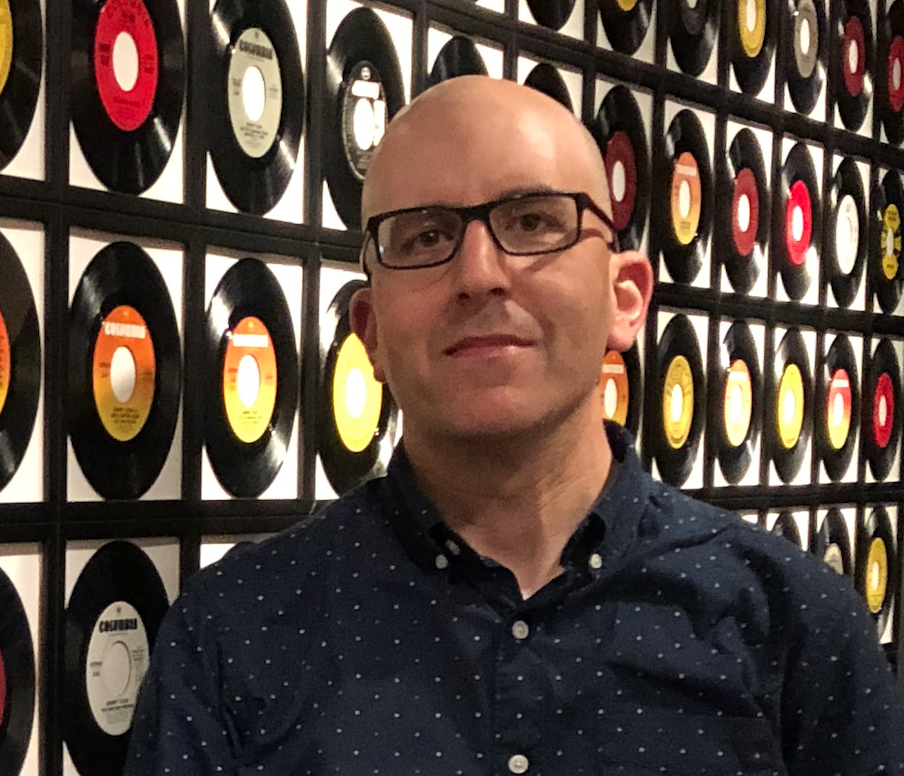
Kamyar Razavi is an Assistant Professor in the School of Communication at UFV. His areas of research interest are in environmental communication, climate journalism, and political engagement around the energy transition.
Prior to his role at UFV, Kamyar worked as a journalist, primarily as a national television news producer with a major Canadian news organization. He has played a key role covering some of the most important domestic and international news stories over 22+ years in TV and online news reporting.
PhD in Communication studies, Simon Fraser University, 2023, with a focus on climate solutions journalism and political engagement.
MA in public policy and management from Tsinghua University in Beijing (2010), with a focus on rural land ownership, village collectives and urban-rural integration.
Bachelor of Journalism from Toronto Metropolitan University (2002).
I strongly believe in teaching via the Socratic model of inquiry. I believe that knowledge is gained through an iterative process of discussion and discovery, with the instructor’s role being to facilitate, provide context and provoke critical inquiry.
I teach in the areas of journalism (with a focus on environmental journalism and communication), as well as social psychology, political economy and critical thinking. I enjoy guiding students through the mechanics and processes of clear writing and communication, as well as on the theories, models and paradigms of engaging communication (focusing on with a environmental themes and narratives).
I research, write and present on topics related to environmental awareness and action. I especially like looking at the ways that solutions-oriented communication (through crisis) enhances the public's engagement with environmental problems. My research in China on village collectives and land rights, coupled with more recent work examining community-led journalism by Indigenous reporters in Canada, inspires me to look at the role of non-dominant news frames upon environmental and climate-related themes.
Conference participation at CleanBC policy review, to create a roadmap for the government of British Columbia on its climate policy post-2025. Organized by the Pacific Institute for Climate Solutions at the University of Victoria. June 2025.
Conference presentation and panel facilitation at the International Conference on Canadian, Chinese and African Sustainable Urbanization. July 2021.
“Climate change reset: Learning from the global pandemic.” Conference and published report.
Simon Fraser University, Faculty of Environment. May 2020.
“Communicating the new climate regime” conference. Texas A&M University, February 20-21, 2020.
“Stories that make a difference,” climate narratives conference and published report. Sussex University, in partnership with Participedia and Simon Fraser University. June 2019.
(forthcoming). Razavi, K., Gunster, S. “Decoding climate solutions journalism: A case study from Canada’s National Observer.”
Gunster, S., Razavi, K. “Climate election, climate media? News and political discourse about climate change in the 2021 Canadian federal election.”
Razavi, K. (2016). A Chinese Approach to Land Rights: How Bo’s Chongqing Model Exposed an Economic Reform Program in Crisis. Facing China as a New Global Superpower: Domestic and International Dynamics from a Multidisciplinary Angle, 67-78.