
Teaching and Learning Centre

Indigenization

Indigenization is a process of naturalizing Indigenous knowledge systems and making them evident to transform spaces, places, and hearts. In the context of post-secondary education, this involves bringing Indigenous knowledge and approaches together with Western knowledge systems. This benefits not only Indigenous students but all students, teachers, and community members involved or impacted by Indigenization.

Embracing Elders

Elders and Knowledge Givers: Beyond the Welcome

Embracing Elders and Knowledge Givers: Beyond the Welcome is to support UFV faculty, staff, and students who are interested in engaging Elders and Knowledge Givers in their classrooms and or special events related to courses that occur both on and off the four UFV campus locations. This is a “living” guide that will continue to be updated based on wisdom from Stó:lō Elders.

Embracing Elders Resource Guide

Indigenization at UFV

UFV's Indigenization specialists

UFV’s Indigenization Specialists play an integral part of the work of Indigenization, decolonization, and reconciliation at UFV. The Indigenization Specialists work with faculty, staff, and students to respond to the Truth and Reconciliation Commission’s 94 Calls to Action and UNDRIP. The Indigenization Specialists are available to work one-on-one, small and large groups to assist and support faculty and staff by building relationships while supporting Indigenization and reconciliation efforts in the world of academia from an Indigenous perspective.

Description

Lorna Andrews, Teaching and Learning Specialist - Indigenization

Indigenization

Lorna assists and supports faculty and staff by building relationships while supporting indigenization and reconciliation efforts in the world of academia from an Aboriginal perspective.

Book with Lorna

Description

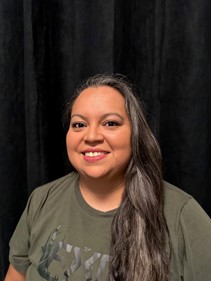
Leanne A. Joe, Indigenous Curriculum Developer

Indigenization

Leanne assists and supports faculty and staff with Indigenizing curriculum and instruction methods by building relationships geared towards reconciliation and allyship with a two-eyed seeing approach.  

Book with Leanne


Indigenizing the Academy - Resources

A bibliography of resource materials compiled by Lorna Andrews.

See the resources


Indigenization workshops

Halq’eméylem Learning and Sharing Workshop

In-person workshop

This workshop is a brief introduction to Halkomalem, the language family and dialects of the Stó:lō Territory. We will learn to recognize special characters and their sounds to help us pronounce the words we see around campus, and practice using those sounds while learning common greetings and place names. We will learn and practice Halq’eméylem that is supplemented using sign, a blend of ‘hand talk’ and ASL.

There are two steps to this Beginner Halq’eméylem Workshop which can be adapted to focus on the campus location.

See upcoming sessions

Chat-R (Reconciliation)

Video chat sessionIn-person workshop

Join us to chat about Reconciliation, Decolonization, Indigenization, or anything associated with Reconciliation. Sessions are scheduled for the 1st Wednesday of the month with a topic to guide our discussion. *This session is a drop-in format; participants can attend or leave at anytime during the session.

Wednesdays, 12-1pm
In-person at UFV Abbotsford campus, Room G124 + Online via Zoom
Facilitated by: Lorna Andrews, Teaching & Learning Specialist, Indigenization

See upcoming sessions

Chat-S (Storytelling and Stó:lō)

Video chat session

Let’s chat about all things Storytelling and Stó:lō and how we can connect what we know with what we want to know more about. Sessions are scheduled via Zoom for the last Wednesday of the month with a topic to guide our discussion. 

See upcoming sessions

Educators Journey Towards Reconciliation (EJTR)

Online workshop

We will go through a journey to discover challenges and best practices in decolonizing our education practice and spaces. Through reflecting on your experiences and knowledge of Indigenous history and issues, we will work through activities based on decolonization, Indigenization, and reconciliation practices. Our journey continues to create a culturally safe learning environment and Indigenizing through reconciling Indigenous worldviews, ways of knowing and being. We will practice reciprocity, respect, responsibility, and relevance throughout our journey together.

Use the form below to let us know you're interested, or if you are interested in any future WKS (Weaving Knowledge Systems) events.

Workshop request form

WKS to Weaving Holistic and Indigenous Pedagogies (WHIP)

In-person workshopOnline workshop

Weaving Knowledge Systems (WKS), formerly Indigenizing the Curriculum, is a workshop that provides you with hands-on experience and resources that will bring together Indigenous and Western worldviews based on your subject area.

WKS will soon be re-designed to WHIP. Updated details will soon follow.

Workshop request form

Territorial Acknowledgment

In-person workshop

During this session, we will learn about Stó:lō’s relationship with Téméxw. We will connect with the land and create a personal and culturally appropriate territory acknowledgment.

*This workshop will be conducted outside. Dress appropriate for the weather.

See upcoming sessions

Let's Talk Territory Acknowledgement

Online workshop

Those who have taken an in-person Territory Acknowledgement workshop are welcome to this session to have a follow-up conversation or to get additional guidance for Territory Acknowledgements. For UFV faculty & staff.

See upcoming sessions

Circle Works Session

In-person workshopOnline workshop

This workshop will provide an overview of the history, cultural protocols, and Indigenous worldviews of Circles. Learn about using Circle Works as a pedagogical tool in both the face-to-face and online classrooms. Strategies to facilitate a culturally appropriate Circle will be discussed and modelled.

Workshop request form

Sharing Indigenous Resources Forum (SIRF)

Online workshop

Drop-in anytime during this session to share Indigenous resources or to get assistance in finding resources. Please be sure to have a course syllabus available so we can determine what you are looking for.

See upcoming sessions

Pining for Needles

In-person workshop

Join TLC’s Teaching and Learning Specialist-Indigenization, Lorna Andrews in learning about her traditional Pine Needle work, while sharing about Indigenization, and eating your lunch.

Learn the history of pine trees, pine needle baskets, and modern practices. Practice making your own mini basket or medallion while sharing your truths/realities of decolonization and Indigenization challenges and successes. Bring a lunch/snack so you keep nourished for the day.

**Pine needle supplies provided**

See upcoming sessions


Indigenization videos

Discussing how to make UFV a more culturally safe enviroment for everyone

Ey swáyel
The Indigenization Committee of the FECHD worked with colleagues from the College of Arts, the FPS, and the Teaching and Learning Office to create this video and we are excited to share it with faculty, staff, and students at UFV. We were hearing a number of concerning stories from Indigenous faculty and students regarding microaggressions they were experiencing in classrooms, meetings, and in the hallways at UFV. These micoagressions are contributing to a lack of cultural safety on our campuses. We wanted to create a video to encourage conversation, share resources, and provide an entry point into considering how to make UFV a more culturally safe environment for everyone.

This video looks specifically at territorial acknowledgements and introductions with guidance from UFV Elders. It includes examples and discussions from interdisciplinary perspectives. It is not a ‘how-to guide,’ nor does it represent the official expectations of UFV. Instead, it provides some guidance around important things to consider when starting to Indigenize and decolonize our work and spaces at UFV.

As you watch the video, we encourage you to pause and consider what is being shared. How can this inform what you do in your own classrooms? How do we go about creating space for different perspectives? What microaggressions have you contributed to? How can we keep our ongoing work around Indigenization and decolonization authentic and from the heart, as opposed to a checklist of things to do?

Finally, we encourage you to share your thoughts and reflections with colleagues as we move towards making this an ongoing conversation on our campuses. If you have any questions, please do not hesitate to email the Chair of the Indigenization Committee at Sheryl.macmath@ufv.ca.

A reflection on the impact of residential schools

IDR Interconnected Venn Diagram


You may also be interested in 

Contact Us