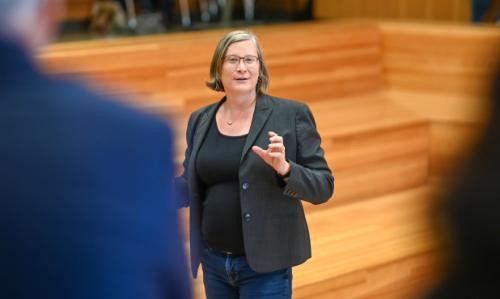
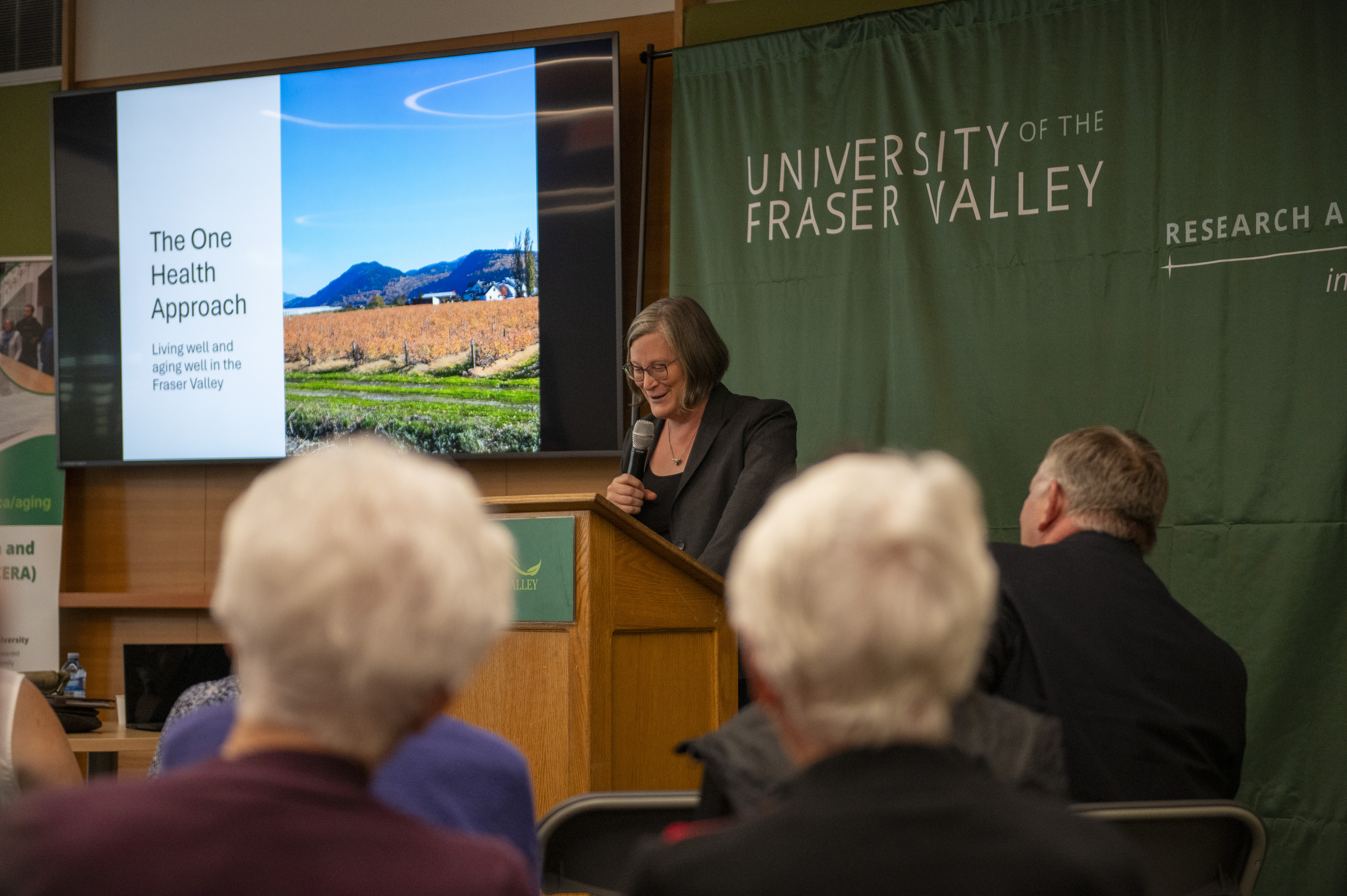
 Dr. Lenore Newman gave the keynote speech on the One Health approach to living well and aging well in the Fraser Valley at CERA Day 2025: International Day of the Older Person at UFV's Chilliwack Campus, early October 2025.
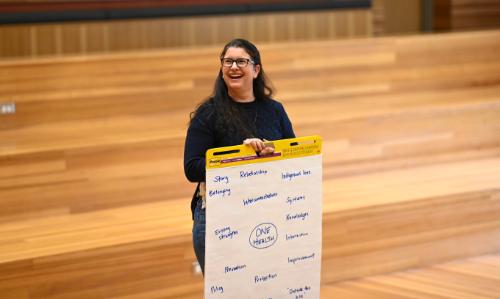
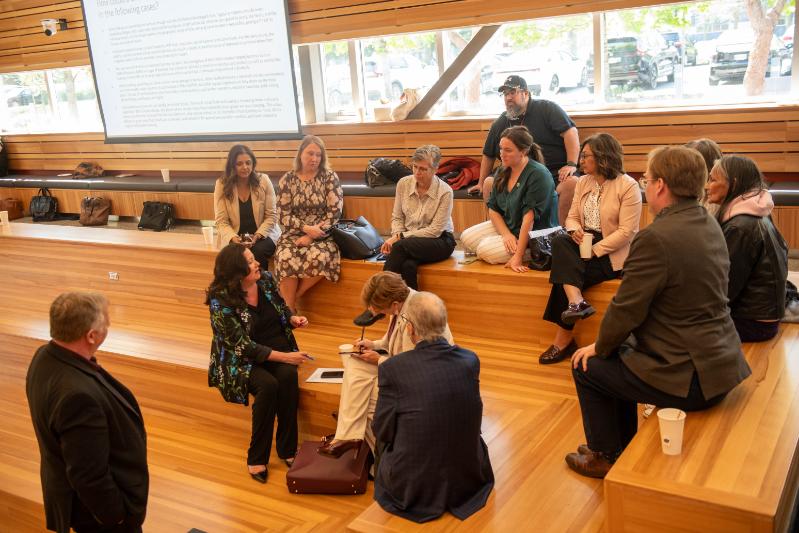 Staff and Faculty from UFV and community guests engage in an open round table discussion on One Health at UFV and the opportunities it presents, early 2025
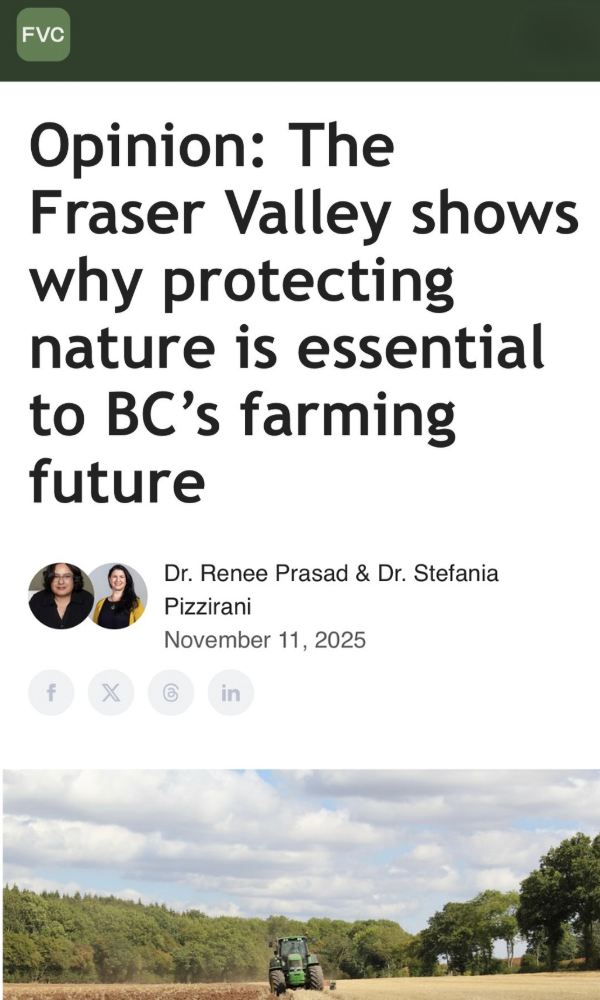
Opinion: The Fraser Valley shows why protecting nature is essential to BC’s farming future
Drs. Renee Prasad and Stefania Pizzirani highlight the University of the Fraser Valley’s One Health framework, which links human, animal and environmental well‑being, and note that agriculture and environmental studies—once treated as separate—must be taught and planned together. They argue that protecting natural systems, especially headwaters, wetlands, riparian zones and snowpacks, is vital to B.C. farm resilience because it stabilizes water flows, reduces flood and drought risk, and improves soil and water quality, and they point to on‑farm measures such as hedgerow plantings and barn‑owl conservation as practical, co‑beneficial examples.
Prasad, R. & Pizzirani, S. (2025, November 11). Opinion: The Fraser Valley shows why protecting nature is essential to BC's farming future. The Fraser Valley Current.
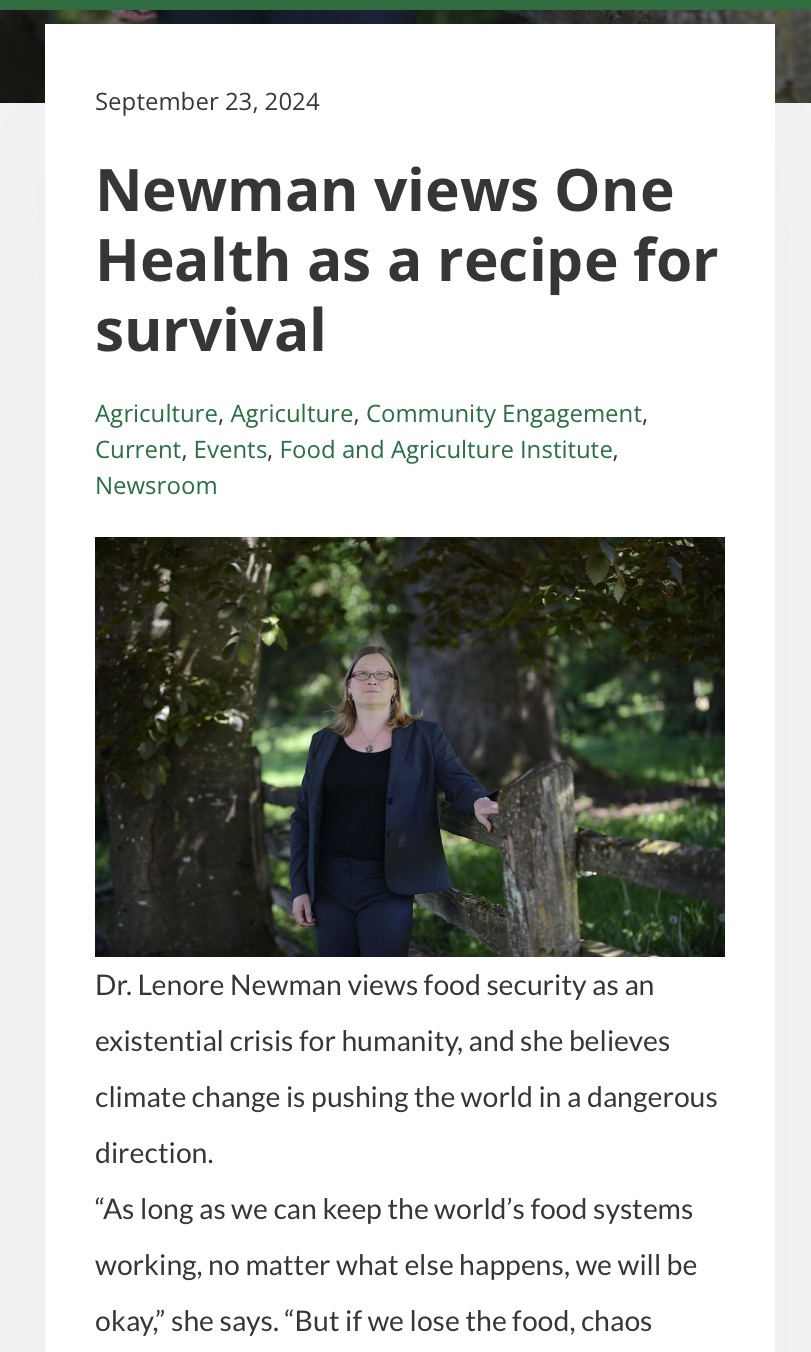
Newman Views One Health as a Recipe for Survival.
Dr. Lenore Newman, Director of UFV’s Food and Agriculture Institute, emphasizes food security as a critical global issue exacerbated by climate change. She warns that the stability of food systems is paramount to averting widespread chaos, underscoring the interconnectedness of humans, animals, and the environment under the concept of One Health. At UFV, Dr. Newman leads initiatives like vertical farming to enhance local food production, addresses societal impacts of agri-genomic technologies, and supports entrepreneurship in agriculture. Newman champions evidence-based solutions and interdisciplinary collaboration to tackle complex challenges facing food systems and environmental sustainability.
UFV Today. (2024, September 23). Newman Views One Health as a Recipe for Survival.