Food and Agriculture Institute
Food and Agriculture Institute
 This project was led by the Food and Agriculture Institute at the University of the Fraser Valley, with support from the Department of Agriculture. Project collaborators include QuantoTech Solutions Ltd., Aright Greentech, Archway Community Services, the Public Health Association of BC, and Farm to School BC.
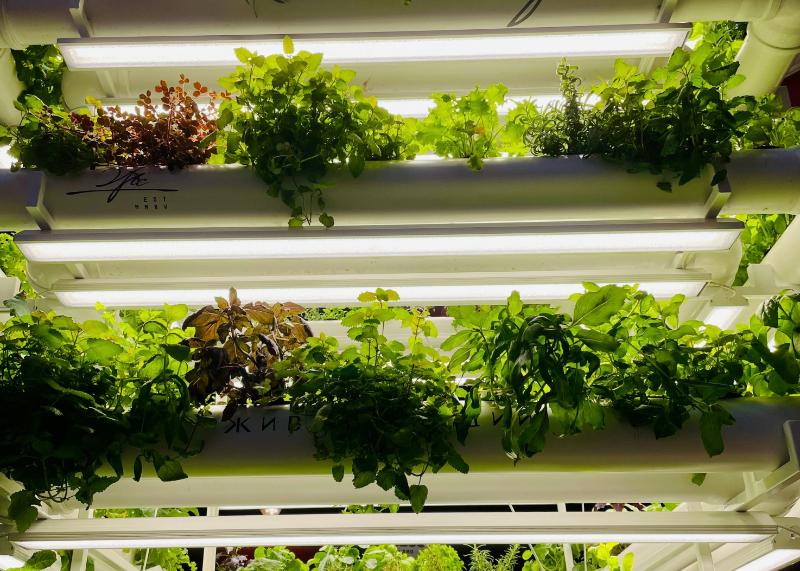
Vertical agriculture has emerged as a viable food production industry in British Columbia. Companies and operations are now commonly seen across the Province, from schoolyards in remote towns to warehouses in downtown Vancouver. The idea is straightforward: move fruit and vegetable production indoors to protect against climate, pests, and relocalize food production in urban as well as remote areas.
Yet, the industry has faced and continues to see substantial challenges. There is a key debate as to whether this technology is best equipped to meet food security needs where there are real tradeoffs in land use, monetary investment, and people-hours that could be spent on other possible solutions. This begs the question: what opportunities are there to develop vertical farming technologies that better match local and public needs? This project is inspired by this question. Although vertical agriculture holds promise for reduced environmental impact and localized distribution, its responsibility to match and advance societal needs, including all stakeholders, needs to be further investigated.
This project responds to this gap by fostering cross-sector collaboration with vertical agriculture industry, policy makers, academics, as well as farmers and community food organizers, to share diverse perspectives on the future for this technology. This SSHRC Connections-funded project leveraged industry interviews and undertook a series of workshops with industry, not-for-profit and community food organizations, as well as members of the public interested in vertical farming technologies. Under the lens of ‘responsible innovation’, this project seeks to integrate public voice into conversations for the future development of this technology as a vehicle for sustainable, resilient, and ethical food systems change.
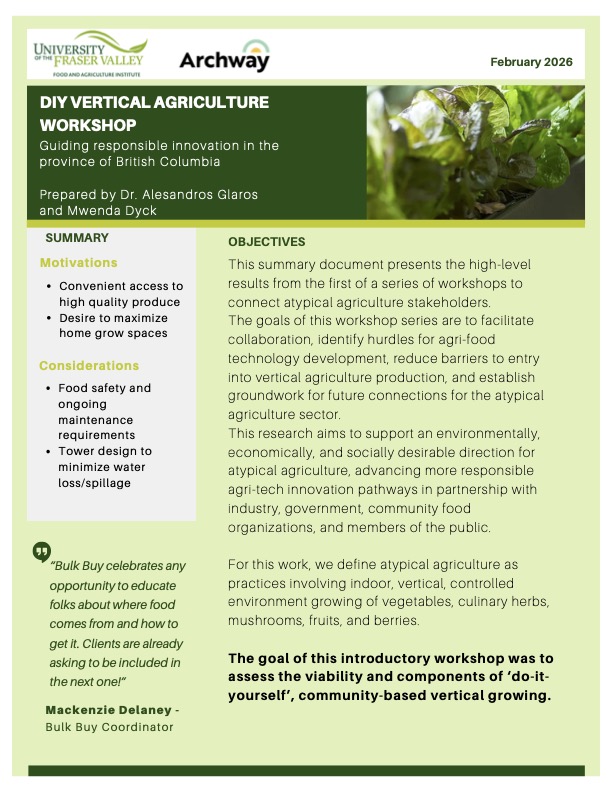
This community-based workshop series explored the viability of do-it-yourself vertical grow tower kits. Findings show interest in home-scale grow towers due to demand for fresh, local food and gardening education, while emphasizing the importance of intuitive design, safe operation, and networking with other workshop participants to support successful operations.
DIY Vertical Agriculture Workshops
Guiding Responsible Innovation in the province of British Columbia
Prepared by Dr. Alesandros Glaros and Mwenda Dyck
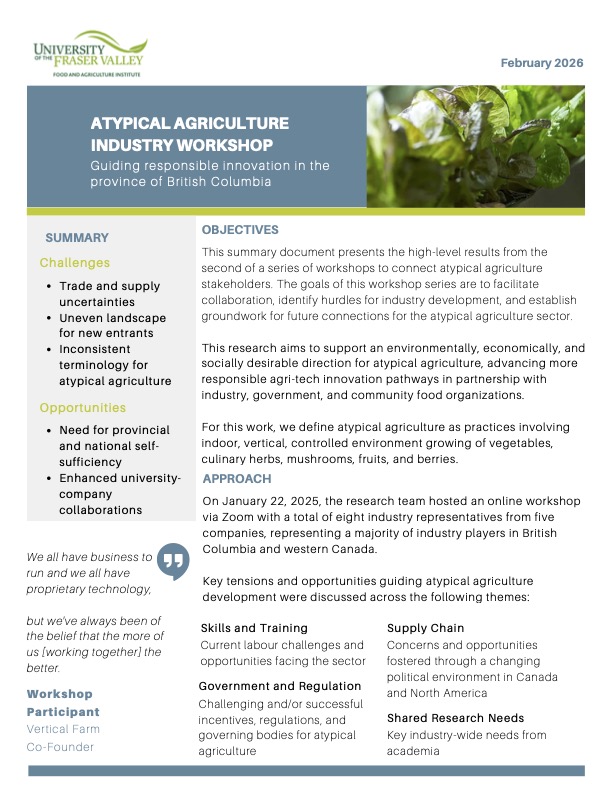
This research employs participatory methodologies, including photovoice, workshops, and the development of an online directory of vertical farming projects. These methods are employed with the goal of bridging across sectors and fostering knowledge and perspective exchange between the community and industry.
Three online workshops were hosted between January and May, 2025. Each workshop explored opportunities for vertical farming in community-, industry-, and not-for-profit-based contexts, respectively. Participants in each workshop were asked to reflect on the potential social benefits and challenges of vertical farming, identifying opportunities for the industry to be more responsive to public needs.
The first workshop included a demonstration of ‘do-it-yourself’ vertical farming at Archway Community Services, sending participants home with grow tower kits with which to experiment. Participants were asked to take pictures of their setups (a photovoice research method) and reflect on how the system interfaces with their lifestyles and food choices, with the goal of empowering participants to share their own perspectives and experiences.
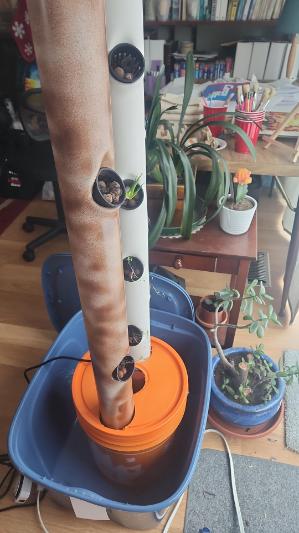
Photo of grow tower inside of a workshop participant's home
The second workshop brought together six of the leading vertical farm industry players in Western Canada. Participants were asked to reflect on challenges and opportunities for the vertical farming sector, and how this technology responds to the needs of the public. This workshop began conversations to establish the first Canadian vertical agriculture-specific industry association.
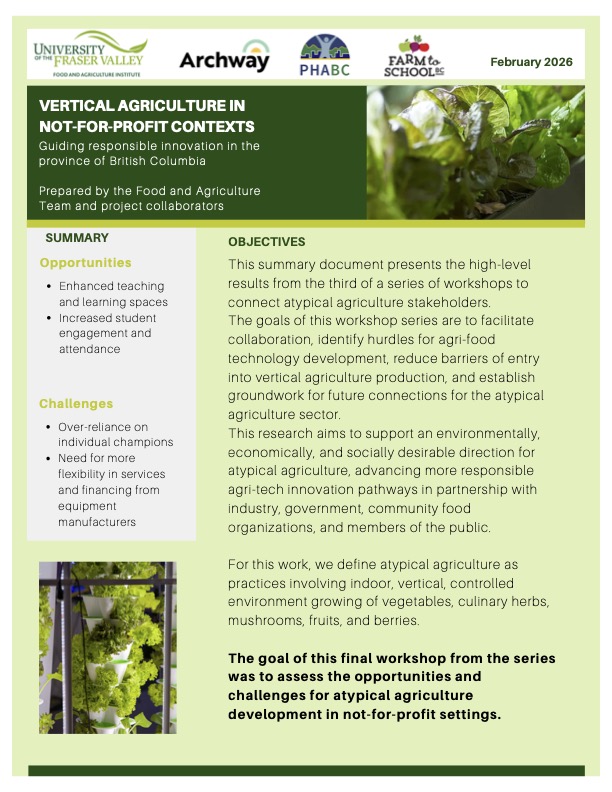
The third and final workshop brought together individuals working in schools, hospitals, and community food organizations who are interested in or actively using vertical production units. The event featured presentations by three individuals involved in research and practice in this space. Participants were asked to reflect on their needs, as technology users, and what support industry could better provide to make their systems more effective.
The last phase of work involves a knowledge exchange with all participants as well as the launch of a dynamic directory of vertical agriculture projects in western Canada. This directory will showcase the industry capacity in British Columbia, gaps in vertical growing technology development, and opportunities for public, private, and community collaboration.
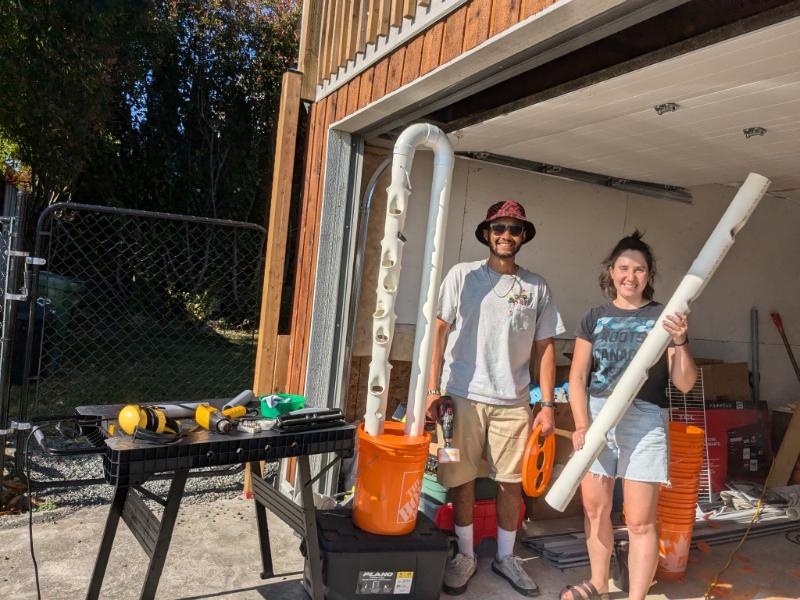
UFV students assisting with construction of 'do-it-yourself' grow towers.
The overall aim of this research and outreach project is to connect all sectors, including public, private, producer, and community groups, to create more inclusive and responsible technology development pathways. It is committed to fueling cross-sector collaboration and community-driven transformations that can better support the responsible development of vertical agriculture technology.